Meet Lovot, the Japanese robot with the intelligence of a hamster, who will roam your house asking for hugs
- Lovot is also equipped with three cameras – 180-degree, depth and temperature – to map and navigate the surrounding environment
- It can remember as many as 1,000 people and distinguish up to 100 at the same time

With large attentive eyes and a plush body that’s warm to the touch, a new robot developed in Japan is designed to hack human emotions.
Looking like a cross between an owl and a penguin, the Lovot is meant to live at home, where it’s only job is to roam around the house, beg you for hugs and generally act as an adorable pet that helps you unwind after a long day. It’s the brainchild of Kaname Hayashi, a former Formula One race-car designer and developer who worked on Pepper, Masayoshi Son’s attempt at creating humanoid assistants.
“This robot won’t do any of your work. In fact, it might just get in the way,” Hayashi said. “Everything about this robot is designed to create attachment.”
Hayashi started Groove X three years ago with the goal of building and selling buddy robots, like R2-D2 or Japan’s Doraemon. By avoiding some of the design pitfalls of its predecessors and doubling up on artificial intelligence, Hayashi is betting that his product will succeed where others have failed.
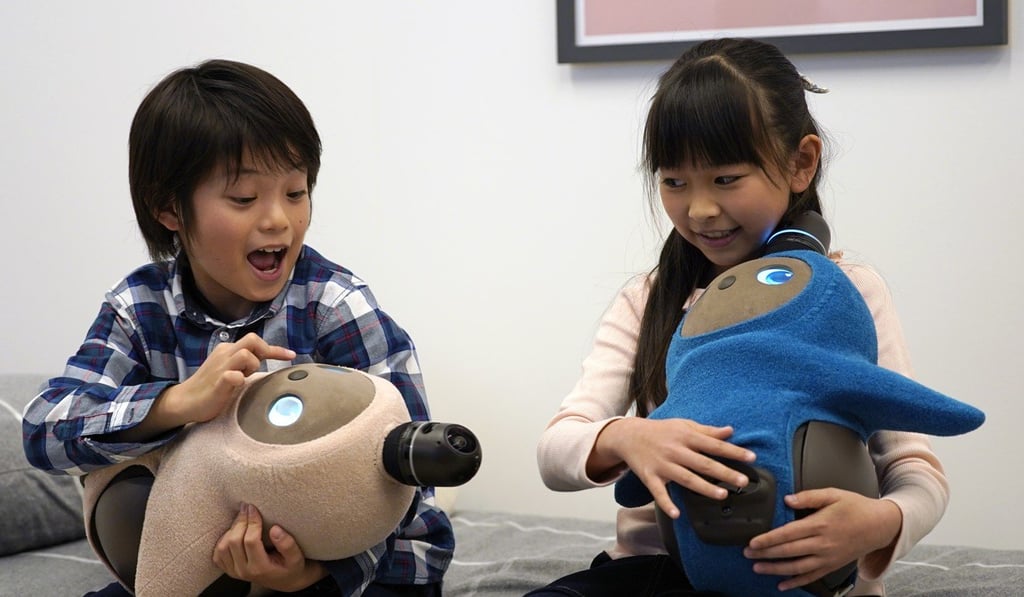
The Lovot doesn’t speak, but instead makes noises that sound like miaows and chirps mixed together – so there’s no Siri-like interaction that can seem awkward. The 40cm-tall robot also doesn’t deliver music or connect with your calendar, because, well, neither does your dog or cat. What might be similar are Lovot’s eyes, which are composed of six graphical layers and mimic involuntary eye movement.
It also comes with an impressive array of sensors and computing hardware normally used for autonomous driving. That allows the robot to act with a level of autonomy and cognition that one might expect from a small pet, Hayashi said. Lovot uses chips typically seen in industrial-grade applications. That allows Groove X to upgrade the deep-learning algorithms responsible for the robots navigation and sensing.