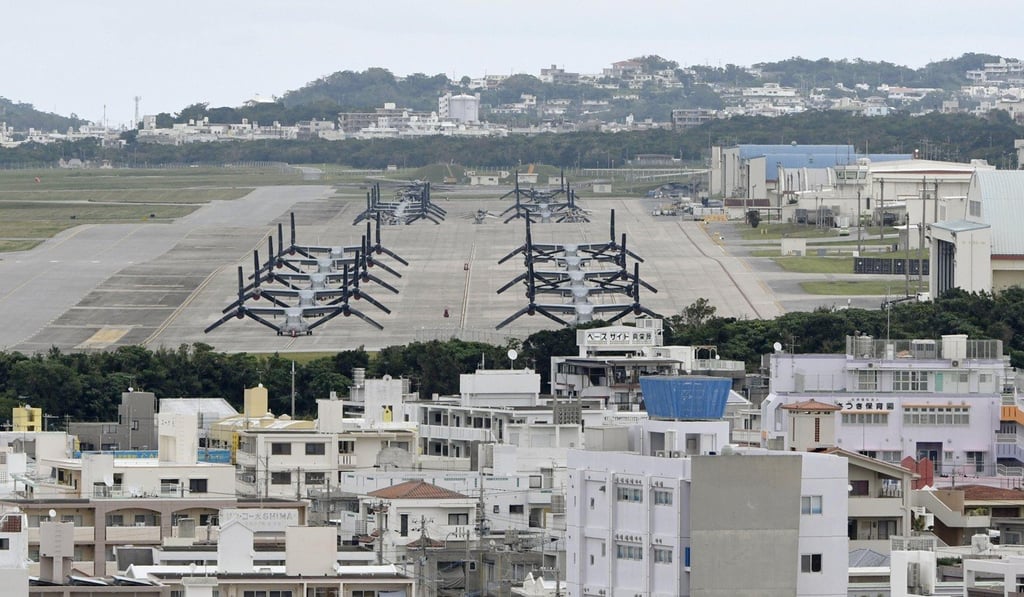
Okinawa residents are poised to vote against relocation of US base in referendum but will the result matter?
- Okinawa accounts for less than 1 per cent of Japan’s total land area but hosts more than half the 47,000 US personnel in Japan
- Residents have asked for bases to be moved, with resentment growing after a string of accidents and crimes committed by US personnel

At 84 and in failing health, Chuuji Chinen remains committed to a cause he has pursued all his adult life. Bedridden and cared for by his son, Chinen submitted his vote by post in Sunday’s referendum on the transfer of the US Marines from Futenma Air Station, in the central part of Okinawa, to an enlarged US military base at Henoko, in the northeast of Japan’s most southerly prefecture.
“He voted against the transfer, of course, and so did I,” said Masafumi, his son. “The people of Okinawa already bear enough of a burden from the US military and we don’t want to put up with it any more.”
Okinawa accounts for less than 1 per cent of Japan’s total land area, but hosts more than half of the around 47,000 American military personnel stationed in Japan. For decades, residents have asked for some of the bases to be moved, with resentment growing after a string of accidents and crimes committed by US military personnel and base workers.
As a solution, Prime Minister Shinzo Abe’s government has sought to move the functions of the Futenma base – which is surrounded by a densely populated urban area – to a remote part of the prefecture, where the existing Camp Schwab is being enlarged through land reclamation.
Most in Okinawa agree Futenma should close and the land returned to its original civilian owners, but they do not want it relocated within the prefecture. They insist the base should be moved to mainland Japan and the task of hosting US troops more evenly shared. Tokyo has periodically claimed to be considering alternative sites for the US military outside Okinawa but no action has followed.
Chinen and the other plaintiffs were incensed when Colonel Richard Leuking, the commanding officer of the Futenma base named in the suit, ignored a request to appear in court. Now, 17 years later, Masafumi Chinen believes public opinion has turned decisively against the presence of US troops in the prefecture.