-
Advertisement
Japan
AsiaEast Asia

South Korea’s complaints about Rising Sun ‘war crime flag’ fall on deaf ears in Japan

  • The 16-rayed flag is often associated with World War Two, the Imperial Japanese Army, and Japan’s 1910-1945 colonial rule of the Korean peninsula
  • At a time of strained bilateral relations, South Korea has sought to ban the flag from stadiums at next year’s Olympic Games in Tokyo
Reading Time:3 minutes
Why you can trust SCMP
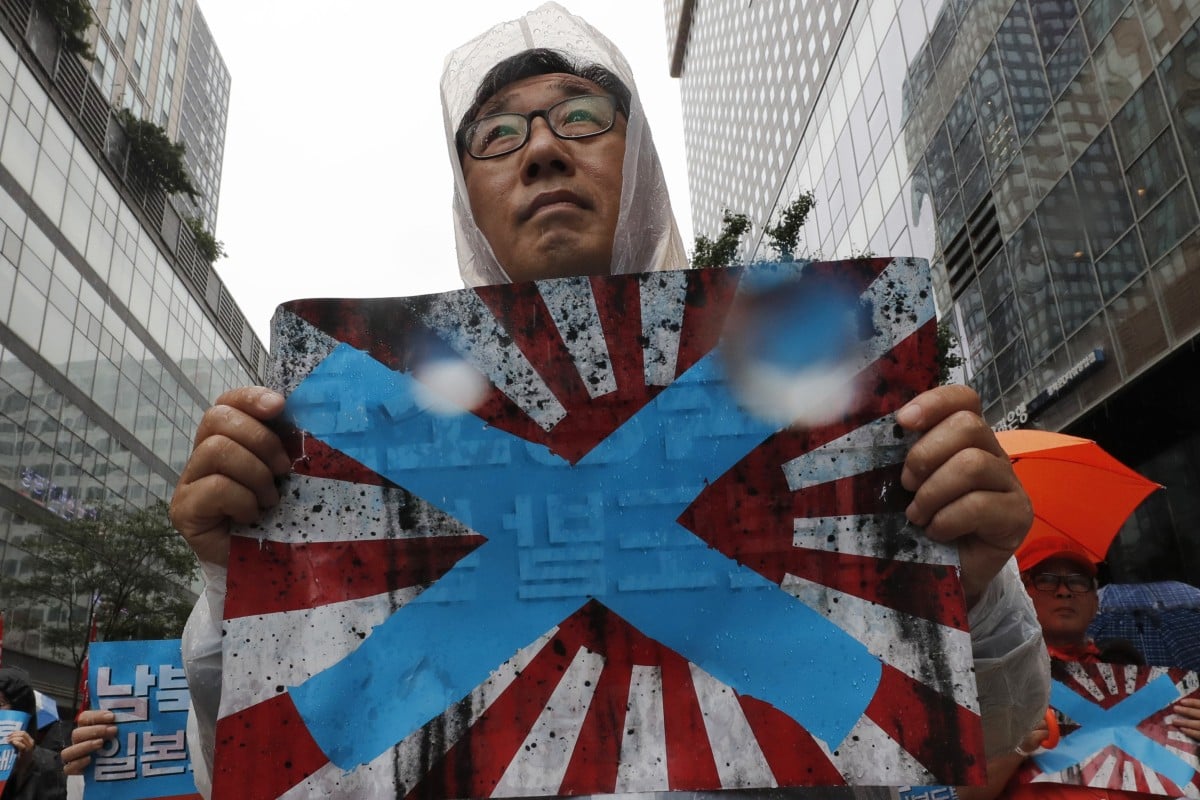
South Korean protesters hold Japanese rising sun flags during a rally to mark the South Korean Liberation Day from Japanese colonial rule. Photo: AP
Julian Ryall
Conservatives in Japan have dismissed South Korea’s attempts to “politicise” next year’s Tokyo 2020 Olympic Games by demanding the controversial rising sun flag with rays be banned from stadiums due to its militaristic history.
South Korea on Wednesday filed a request with the International Olympic Committee (IOC) to ban the flag from next year’s games. An earlier request, filed by South Korean Olympic officials to the Japanese organising committee, was rejected by Tokyo on the grounds the flag is not a political statement and “is not viewed as a prohibited item”.

The 16-rayed flag, also known as the “war crime flag” among some South Koreans, is often associated with World War Two, the Imperial Japanese Army, and Japan’s 1910-1945 colonial rule of the Korean peninsula.

In recent months, Japan-South Korea relations have reached their lowest ebb in years, with the nations in conflict over compensation rulings for wartime labour made by South Korean courts and Japan’s decision to impose trade restrictions citing national security.
Advertisement

In its letter to the IOC, South Korea’s sports ministry likened the flag to the Nazi swastika and said it was a symbol of the “historic scars and pain” inflicted on the Korean peninsula by imperial Japan.

The letter also expressed Seoul’s “deep disappointment and concern” over Tokyo’s earlier refusal to ban the flags and pointed out that Fifa, the governing body of world football, banned the flag from international matches.
Advertisement
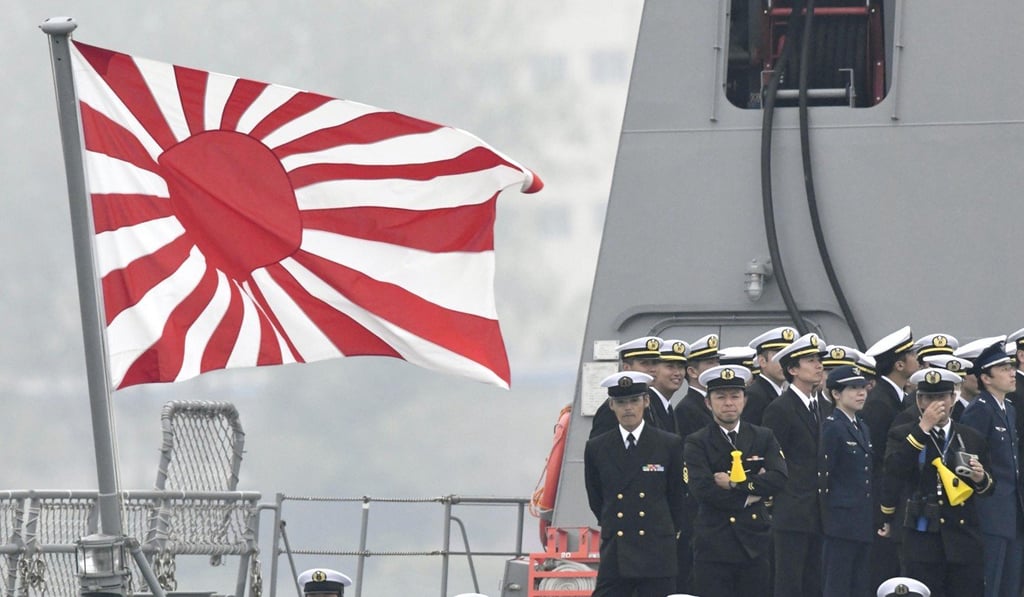
A Japanese Maritime Self-Defense Force ensign on the deck of the destroyer Suzutsuki. Photo: Kyodo

Yoichi Shimada, a professor of international relations at Fukui Prefectural University, said the flag was used by the Japanese navy and, since the end of World War Two, by the Maritime Self-Defence Force (MSDF).

Advertisement
Select Voice
Select Speed
1.00x