Japan’s Kyoto targets badly behaved tourists with smartphone alerts on local manners
- Visitors staying in the city are often unaware of local customs, such as the way household rubbish is meticulously separated for recycling
- There have also been reports of bad behaviour, including tourists chasing geishas and their apprentices with cameras in the streets

The programme has been implemented around the “Hanamikoji” street in Kyoto’s Gion district, renowned for its tea-houses and other historic buildings. Visitors who have installed a tourist information app or carry mobile devices rented from hotels and inns automatically will receive information about local manners in English and Chinese.
“It’s complicated,” admits Kei Tamura, who lives in the city and is a director of Cerca Travel. “Tourists have had a huge positive impact on local businesses and we believe that their experiences are helping to promote Kyoto around the world. But, on the other hand, there are people here who say it has already gone too far, that there are simply too many tourists in the city and the local infrastructure cannot cope.”
The project, which will run until December 8, was launched by the Land, Infrastructure, Transport and Tourism Ministry in cooperation with the Kyoto city government.
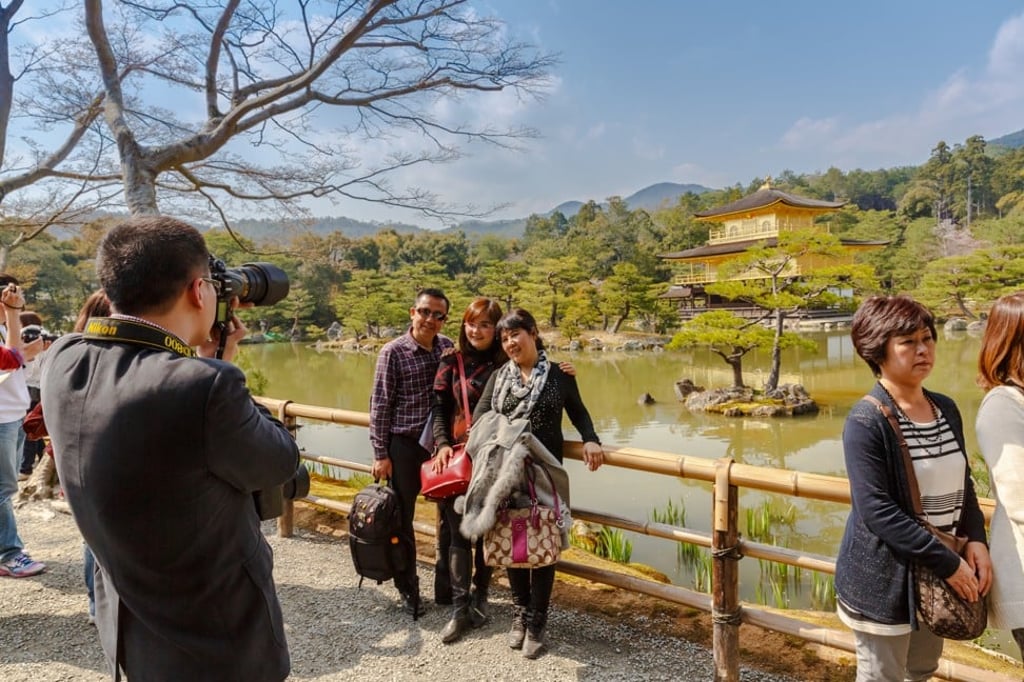
Foreign visitors have earned an unsavoury reputation in recent years: buses around most popular sites have become too busy for local residents to use and the crowds outside famous attractions make it difficult to navigate parts of the city.
In a survey about tourists’ behaviour circulated last year among local residents, bars and restaurants, members reported seeing visitors “sit and lie on the streets to take pictures” and foreigners chasing geisha and their maiko apprentices with cameras.
Visitors staying in the city are often unaware of local customs, such as the way household rubbish is meticulously separated for recycling, causing friction with residents. There have also been complaints about noise and loud music at night in rental accommodation and a general disruption of the city’s low-key atmosphere.