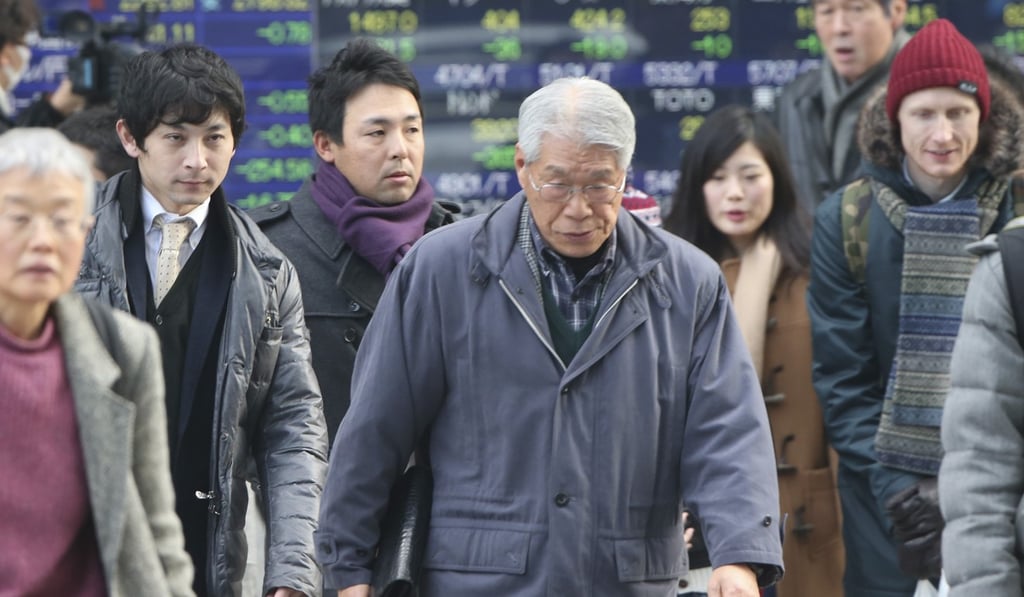
In Japan’s ageing society, elderly are determined to resist the push towards cashless payments
- Tokyo wants to double the ratio of cashless settlements to 40 per cent by 2025 and to 80 per cent eventually to spur labour productivity
- However, Japanese households hold more than half of their assets in cash and deposits and that proportion rises with the elderly

Prime Minister Shinzo Abe’s push to make more Japanese – the world’s most dedicated cash-hoarders – switch to using cashless payments is producing some success, but not nearly as much as desired. A growing rank of the nation’s elderly pensioners are resisting change, which could see Japan fall further behind its peers in adopting mobile app payments and electronic money.
Tokyo wants to double the ratio of cashless settlements to 40 per cent by 2025 and to 80 per cent eventually to spur labour productivity. Japan pales in comparison with other countries – 96 per cent of transactions in South Korea and 66 per cent in China are cashless, data by an industry lobby Payments Japan Association shows.
The transition to digital transactions will help Japan cope with a shrinking population and a tight labour market. Cashless payments will also allow stores to automate sales estimates and banks to cut back on costly automated teller machine networks.
Shoppers were recently encouraged to ditch cash for e-money after the government sweetened the deal by introducing a rebate programme to ease the pain of a sales tax hike on October 1.
Funded by US$2.57 billion earmarked for subsidies, shoppers get a refund in the form of points if they use cashless payments at small shops and convenience stores.