Advertisement
German reunification once gave South Koreans hope. But that hope has faded
- Germany gave South Korea a piece of the Berlin Wall as a ‘symbol of hope’ for the reunification of the Korean peninsula
- But South Koreans now doubt whether the German example is relevant and if a single Korea is attainable
5-MIN READ5-MIN

Office workers, delivery boys and teenagers in school uniforms hurried through the rain, past the battered concrete slab without giving it a second glance.
Hana Lee strode up, stared at it pensively, then snapped a photograph.
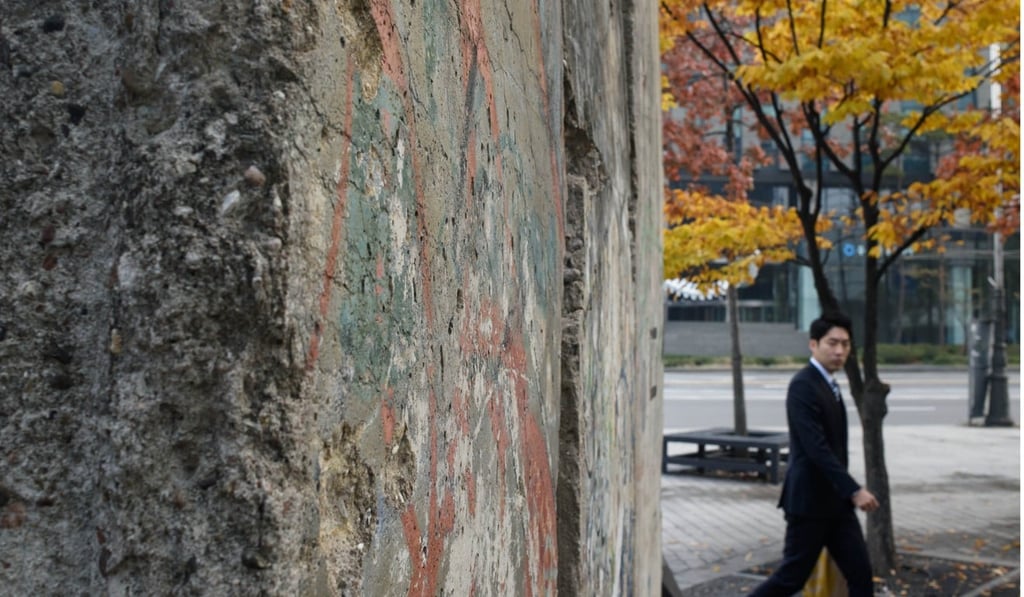
The panel – 3.7 metres (12 feet) wide, about as tall and 38cm (15 inches) thick – is a piece of the Berlin Wall. It has been on display in downtown Seoul since 2005, when Germany gifted it to South Korea as a “symbol of hope for the peaceful unification of the Korean peninsula”.
Advertisement
Lee, a 37-year-old South Korean opera singer, was visiting from Germany, where she has lived for the last 14 years.
Advertisement
Pieces of the wall are also exhibited in Germany, but Lee wanted to see it here, 30 miles from the proverbial final cold war frontier between North and South Korea – a heavily guarded barrier no closer to crumbling than it was when the one in Berlin fell in 1989.
Lee thought of her maternal grandfather, who fled south during the Korean war and died never having been able to return home.
Advertisement
Select Voice
Select Speed
1.00x