Why real wasabi is considered ‘green gold’ in Japan’s sushi restaurants
- Most people’s experience of wasabi is the imitation version made from horseradish – but actual wasabi root is difficult to grow and expensive to buy
- Chefs at top sushi restaurants say fresh wasabi not only masks the smell of the raw fish, but also heightens its flavour, with spicy yet sweet notes

Unlike the spicy neon concoction familiar to many fans of Japanese cuisine – which is in fact made from horseradish – real wasabi is pale-green and offers a complex, mildly piquant flavour.
But even in Japan, it is not common fare. That is because the knobbly root is so difficult to grow, and consequently expensive to buy, with most of it snapped up by wholesalers.
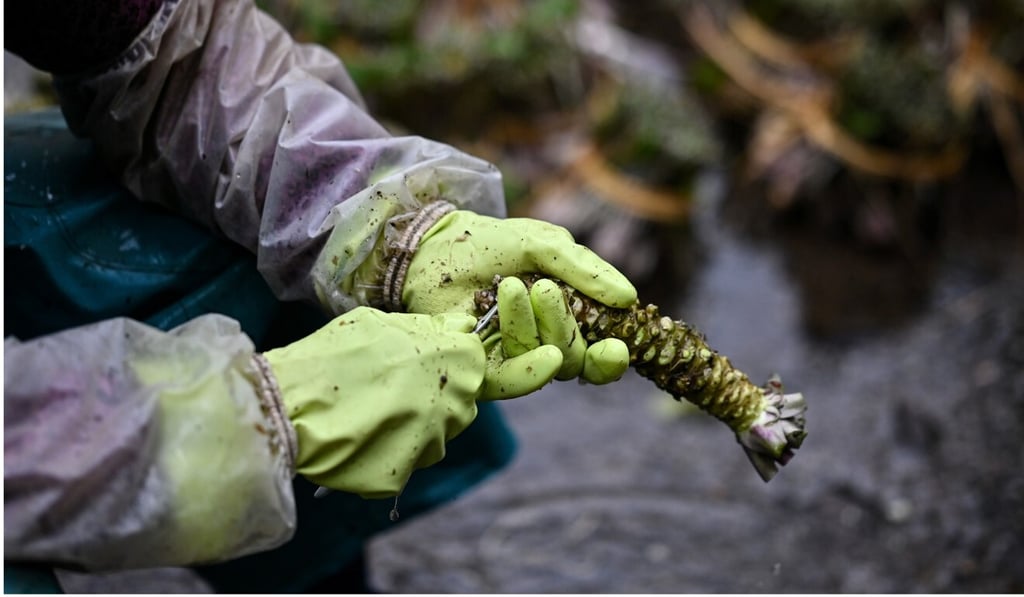
“The most important requirement is crystal-clear water, in abundance,” said Yoshihiro Shioya, 62, as he pulled a wasabi root from the sodden soil at his lush, green mountainside farm on Shizuoka province’s Izu peninsula.
“It’s absolutely necessary that the water temperature stays between 10 and 15 degrees Celsius, year-round,” added Shioya, whose family has cultivated wasabi in the region for seven generations.