Advertisement
In Japan, Afghan mural destroyed by Taliban brought back to life with ‘super clone’
- Not a single fragment remains of the seventh-century cave painting demolished in 2001 by the Taliban
- Yet a precise replica, the result of a painstaking three-years reproduction, went on display in Tokyo earlier this year
2-MIN READ2-MIN

Agence France-Pressein Tokyo
Japanese researchers have crafted a “super clone” of an Afghan mural destroyed by the Taliban, using a mix of traditional and digital techniques that they hope will salvage the work’s “spirit” for future generations.
Not a single fragment remains of the seventh-century cave painting demolished in 2001 along with two massive Buddha statues and other artefacts in Afghanistan’s Bamiyan valley, sparking global condemnation.
But a precise replica, the result of three years of state-of-the-art reproduction efforts, went on display at a museum in Tokyo in September and October, just weeks after the Taliban returned to power in Kabul.
Advertisement
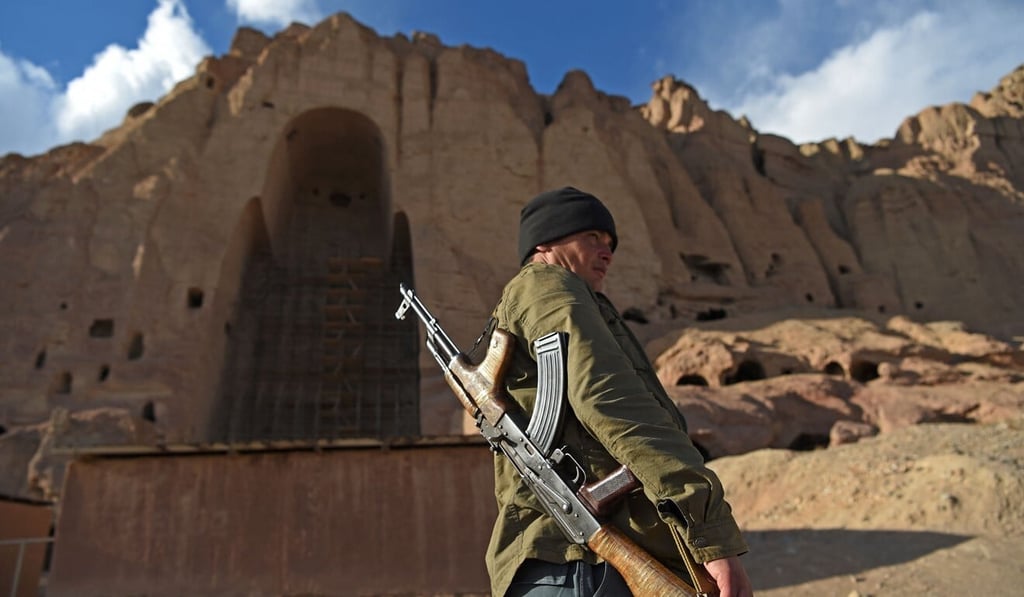
The mural on the ceiling of a cave near the famous statues depicted a blue Bodhisattva – or someone on the path to becoming a Buddha.
Advertisement
At six metres long and three metres high (20 by 10 feet), the intricate full-size copy has been dubbed a “super clone” by the reproduction team at Tokyo University of the Arts.
Advertisement
Select Voice
Select Speed
1.00x