Joe Biden’s Indo-Pacific strategy gets thumbs down by two Japanese legislators
- ‘The Biden administration is talking about Indo-Pacific Economic whatever; I would say forget about it,’ says Taro Kono, an ex-defence minister
- Rather than introduce a new framework, US is urged to join Comprehensive and Progressive Agreement for Trans-Pacific Partnership

Two members of Japan’s House of Representatives – both former government ministers – suggested on Wednesday that US President Joe Biden’s plan for greater integration among Washington’s Indo-Pacific allies and partners is an inferior substitute for the trading bloc the US abandoned five years ago.
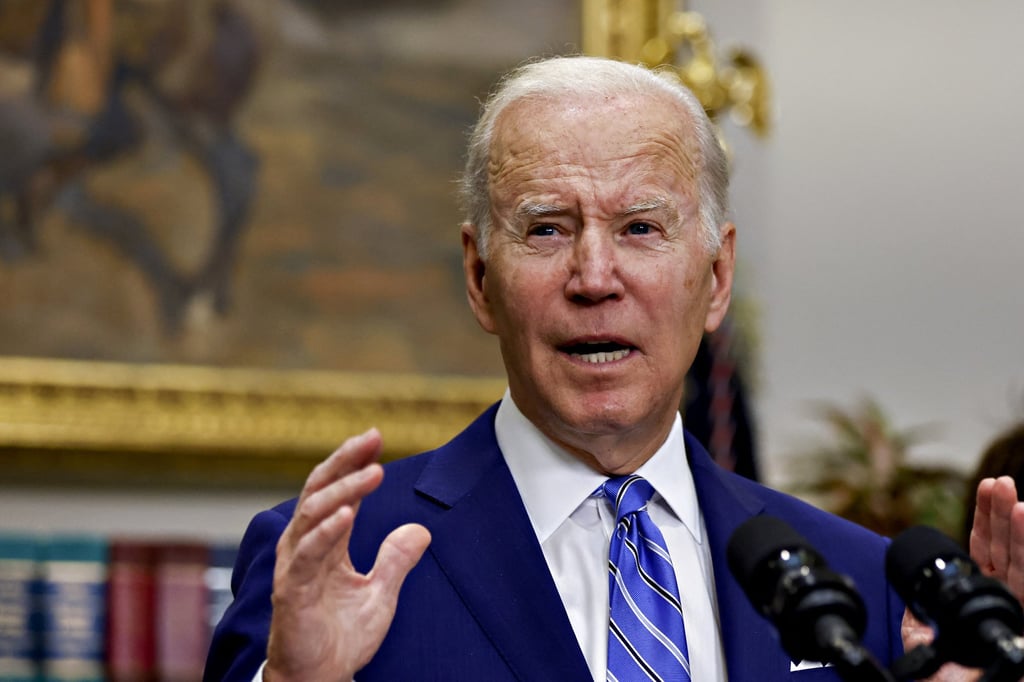
Speaking at the Brookings Institution in Washington, Kono said that the objectives that Biden has laid out for his Indo-Pacific Economic Framework (IPEF) would be better served through CPTPP if the US were a member.
The partnership, which includes New Zealand, Japan, Canada, Mexico and seven other countries, accounts for about 13 per cent of global commerce.
“When the United States proposed to be part of TPP, it was … to create a rule-making body for the Indo-Pacific, and that’s why we paid a huge political cost [to join],” Kono said. “When we managed to sign the TPP, United States simply left.
“Now the Biden administration is talking about Indo-Pacific Economic whatever, I would say forget about it,” he added.
Most details of IPEF have yet to be made public, but the White House has released enough of the plan to differentiate it from a traditional trade bloc based on free-trade agreements.