Japan, South Korea, Taiwan chip makers see hi-tech decoupling with China inevitable
- US is taking the lead in building a ‘Chip 4’ alliance with Taiwan, South Korea and Japan for increased economic security over a possible global chip crunch
- Cross-strait tensions have risen since the Chinese military held massive exercises around the self-ruled democratic island
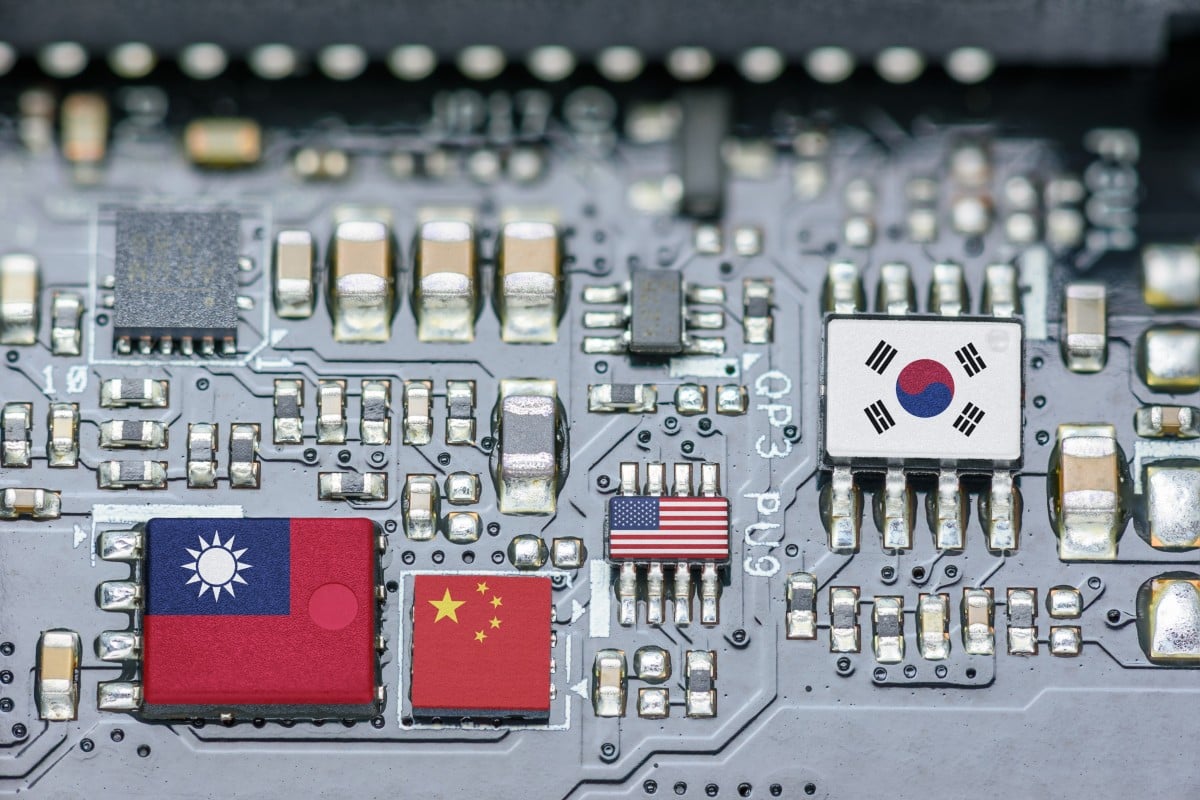
Major players in the semiconductor supply chain in East Asia appear to be seeing it as inevitable for them to decouple with China in advanced industries involving sensitive technology, given concerns about the rapid pace of Beijing’s military modernisation.
The United States is taking the lead in building a “Chip 4” alliance with Taiwan, South Korea and Japan for increased economic security over a possible global chip crunch in the event of a contingency between Taiwan and China.
Japan – once the front runner in the global semiconductor industry but now trailing leading chip producers like Taiwan and South Korea – eyes manufacturing and selling 2-nanometer generation chips at Rapidus Corp., a new consortium involving Toyota Motor Corp., Sony Group Corp. and six other leading companies.
The issue of supply chain resiliency was addressed during the Asia-Pacific Economic Cooperation (Apec) summit that ended Saturday in Bangkok, after chip shortages exacerbated by Russia’s invasion of Ukraine hit automobile and other industries hard.
In October, the US Commerce Department announced a sweeping list of new export controls targeting China’s chip and supercomputing industries, a move analysts say is intended to restrict Beijing’s ability to purchase and manufacture certain high-end chips used in military applications.
Although China manufactures some semiconductors, its foundries are not capable of manufacturing the most advanced logic chips. Beijing heavily relies on Taipei for advanced semiconductors needed to modernise its military, as well as software and tools from the United States.

01:57
China condemns new US law aimed at boosting domestic semiconductor manufacturing
US Commerce Secretary Gina Raimondo said Washington has called on its allies to comply with the US export controls to restrict China’s access to advanced semiconductor technologies and impose similar restrictions.