Japan researchers working to reduce climate impact of cow burps
- Project will develop stomach sensors, use AI to administer feed that inhibits methane production, aim to reduce cows’ methane emissions by 80 per cent by 2050
- Methane, produced by cows when microbes in their stomachs break down grass and other roughage, is believed to be one of the major causes of global warming

The project led by Yasuo Kobayashi, a specially appointed professor in the Graduate School of Agriculture at Hokkaido University, aims to reduce cows’ methane emissions by 80 per cent by 2050.
Methane, produced by cows when microbes in their stomachs break down grass and other roughage, is believed to be one of the major causes of global warming.
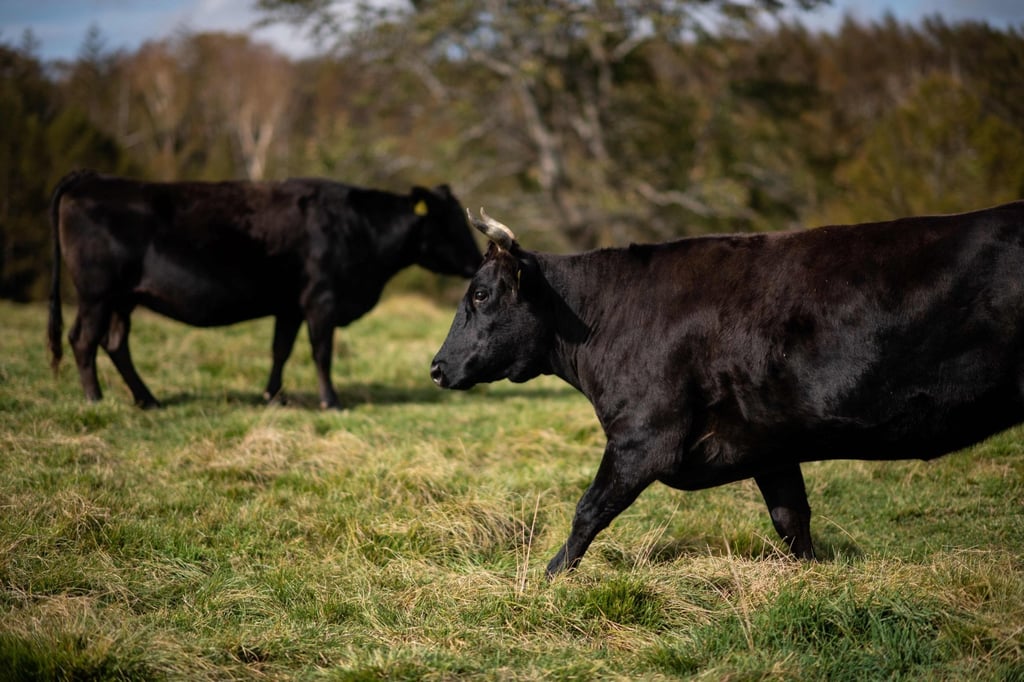
Cows have four distinct compartments in their stomachs that work together to digest dietary fibre in grass with the help of around 7,000 bacterial species.
In the rumen, the first and largest compartment of a cow’s stomach, microbial decomposition and fermentation produces hydrogen, which is then converted to methane by other microbes.
The methane expelled in cow burps is said to have a greenhouse gas effect around 25 times greater than carbon dioxide, with the annual emissions of a single cow equivalent to those from 1.7 cars.
Earlier research has shown that when oil extracted from cashew nut shells is mixed into cow feed, the hydrogen produced is converted to nutritious propionic acid instead of methane, effectively reducing emissions of the greenhouse gas by approximately 20 per cent.