Japan to end Covid-19 border controls on May 8, classifies it as common disease
- The country will start a genomic surveillance programme, under which entrants with symptoms such as fever are tested voluntarily, to detect new infectious diseases
- Japan’s Covid-19 border controls are considered by some to be the most stringent among the Group of Seven industrialised nations

The government will simultaneously start a new genomic surveillance programme, under which entrants with symptoms such as fever are tested voluntarily, with the aim of detecting new infectious diseases.
Currently, all entrants are required to present certification of three Covid-19 doses or a negative coronavirus test taken within 72 hours of departure.
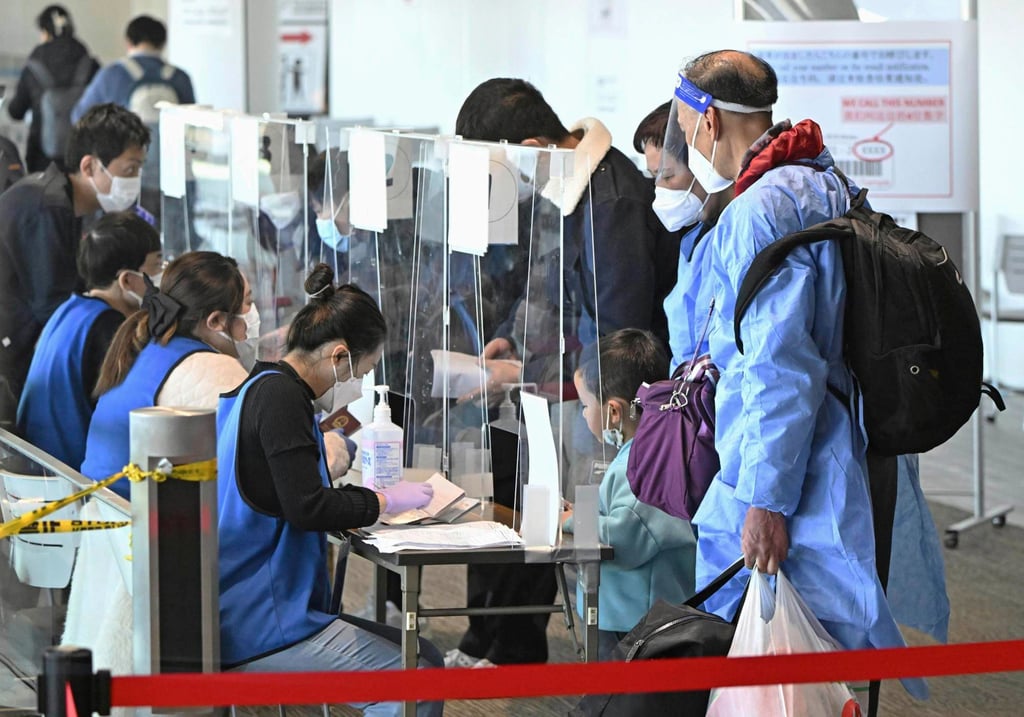
In November 2021, Japan tightened border controls by barring the entry of non-resident foreigners and requiring returning Japanese nationals and foreign residents to quarantine at designated facilities as the country began seeing cases of the Omicron variant of the coronavirus.
Initially implemented for a month, the control measures were later extended, sparking protests from foreign exchange students and businesspeople. The country started gradually easing the daily entry cap in March 2022 before completely lifting it in October of that year.