Japan’s ‘ama’ divers struggle to stay afloat as rising sea temperatures erode incomes
- In Japan and South Korea, ama diver numbers are declining as rising sea temperatures reduce catches and make it more difficult to sustain a living
- Surveys show number of divers in the Japanese cities of Toba and Shima have plummeted to fewer than 10 per cent of the 1949 figure

Yoshino Uemura came late to the world of female “ama” divers, taking the plunge in her 40s. But now, over two decades later, she feels there is no time to lose if her chosen profession is to survive for future generations.
Clad in wetsuits, ama divers submerge to great depths without air tanks to gather abalone, seaweed and other seafood, and sometimes pearls. They exist only in Japan and South Korea, but in the profession’s Japanese heartland of Mie Prefecture, it is dying out.
Surveys show the number of divers in the cities of Toba and Shima have plummeted to fewer than 10 per cent of the 1949 figure.
The main culprit appears to be environmental deterioration caused by rising seawater temperatures, which reduce catches. The resulting low incomes make it exceedingly difficult to sustain a living.
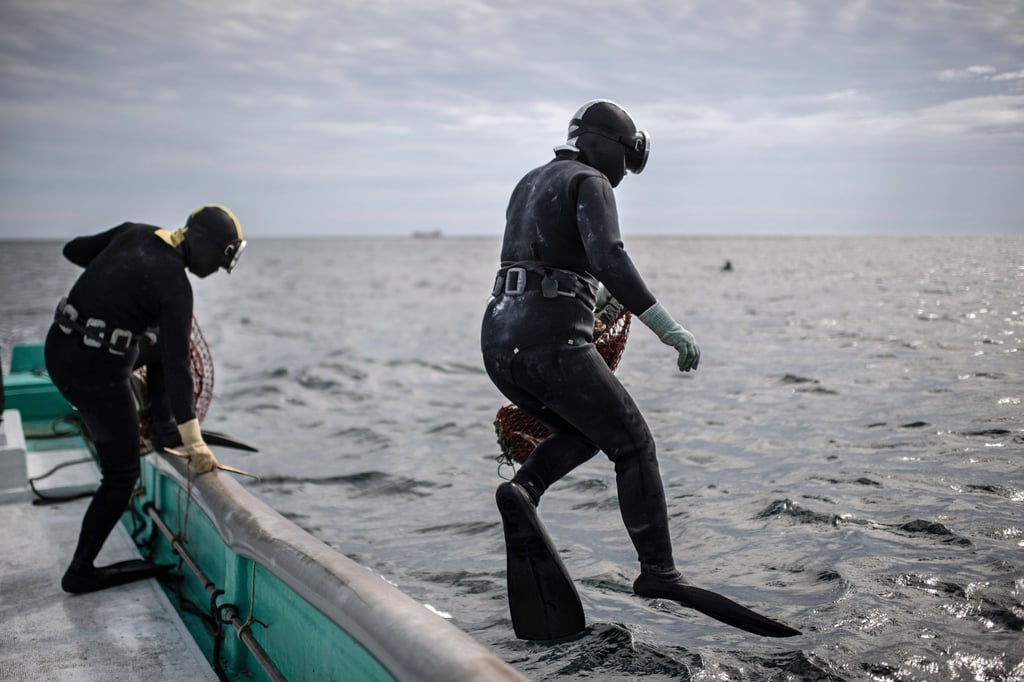
Efforts are under way to improve the marine environment and secure new sources of revenue for divers, but there appears to be no silver bullet. Some locals are concerned that the culture of ama divers could cease to exist in generations to come.