G7 vows to step up moves to renewable energy, zero carbon, but no coal exit deadline
- Ministers issue 36-page communique reaffirming commitment to accelerating the clean energy transition to net-zero greenhouse gas emissions by 2050 at the latest
- Timeline for phasing out coal remains sticking point, even as bloc acknowledges need to achieve a ‘predominantly decarbonised power sector’ by 2035

The G7 officials issued a communique laying out their commitments, pledging to collectively increase offshore wind capacity by 150 gigawatts by 2030 and solar capacity to more than 1 terawatt. The 36-page document was prepared in advance of a G7 summit that will be held in Hiroshima in May.
“We will drastically increase electricity generated by renewable energies,” they said.
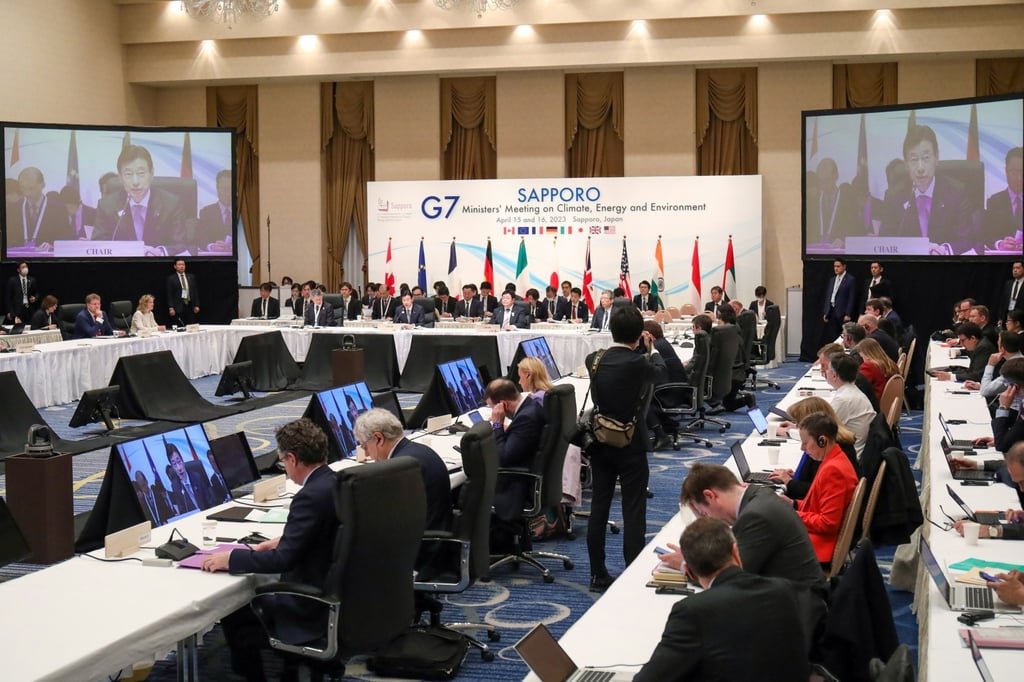
“Recognising the current global energy crisis and economic disruptions, we reaffirm our commitment to accelerating the clean energy transition to net-zero greenhouse gas (GHG) emissions by 2050 at the latest,” the communique added.
The leaders recognised the importance of finding efficient, affordable and diverse energy sources, which “underscore our commitment to implementing immediate, short- and medium-term action in this critical decade”, it said.
Japan’s energy minister Yasutoshi Nishimura characterised the communique as “ambitious” and praised the G7 for “recognising diverse paths towards carbon neutrality” during the energy crisis.