In South Korea where birth rates are the world’s lowest, a lawmaker fights to eradicate ‘no-kid zones’
- Lawmaker Yong Hye-in, 33, leader of the Basic Income Party, was the third sitting assembly member in South Korean history to give birth in office
- South Korea has offered cash subsidies, babysitting services and support for infertility treatment but fertility continues to fall to new lows

The first time South Korean lawmaker Yong Hye-in left the house after giving birth, she ended up in tears when she was denied entry to a cafe because of her baby.
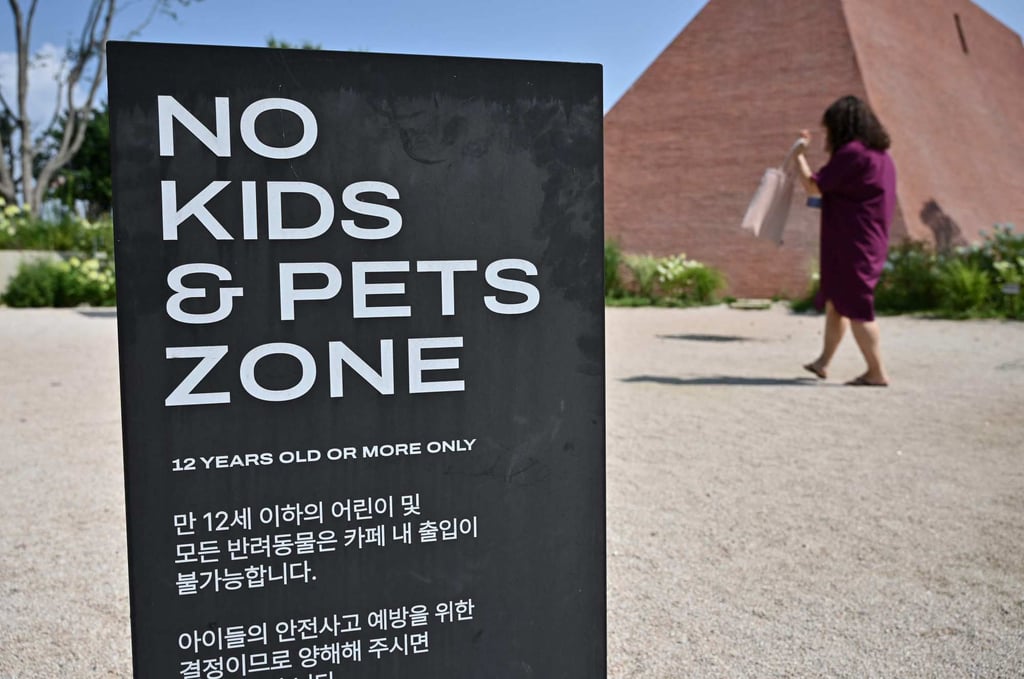
Seoul has poured hundreds of billions of dollars into trying to encourage South Koreans to have more babies, offering cash subsidies, babysitting services and support for infertility treatment, but to no avail, with the fertility rate continuing to plummet to new lows.
At 0.78 births per woman, it is far below the replacement rate needed to keep the population size stable, and many experts now say social factors – not purely economic ones – may be driving the decline.
No-kid zones offer a range of official reasons for the exclusion, often pointing to disruptive noise or “inconsiderate” parents, but Yong says it is pure discrimination and impacts young mothers in particular.
“I felt like I had been expelled from society,” Yong said as she recalled her experience being turned away from the cafe after finally mustering the energy to get herself and her newborn out of the house.