Japan bullet train operator JR Central turns to on-board tech to ramp up safety checks
- Central Japan Railway is looking to improve its shinkansen bullet trains’ renowned safety record by making more frequent checks at a lower cost
- Its new technology, a scaled-down version of the its ‘Dr Yellow’ high-speed diagnostic trains, has been installed on its newest trains, the N700S series

Japan’s shinkansen bullet trains are renowned for their safety, but Central Japan Railway is looking to improve that record by making more frequent checks at a lower cost through special inspection equipment it has installed on in-service trains.
While the most famous name in Japanese bullet train safety is “Dr Yellow” – a yellow high-speed diagnostic train that travels on an unpublicised schedule – the new technology is allowing JR Central to make checks more quickly. Now, the company is even developing an image-recognition system to replace in-person inspections by workers.
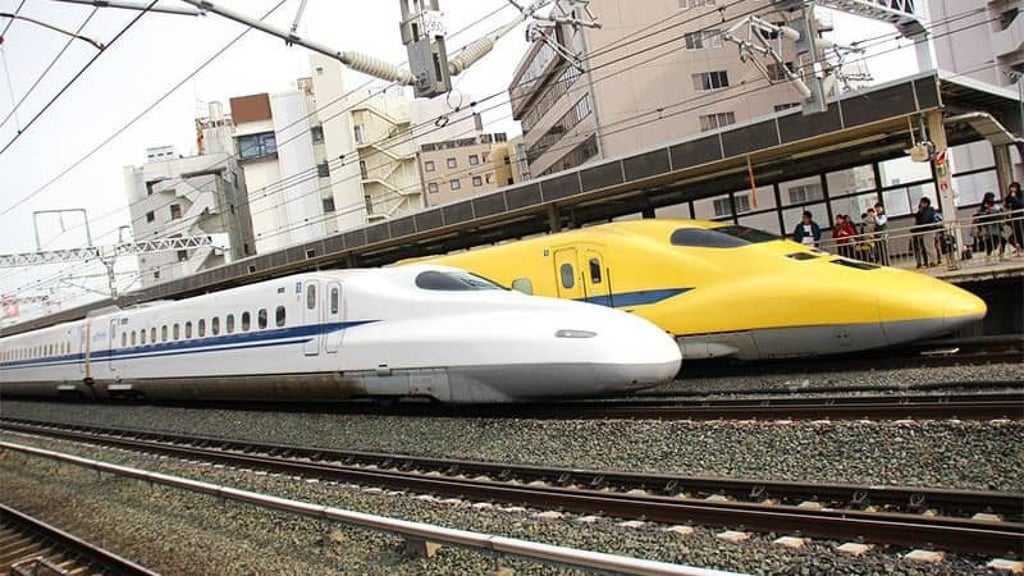
According to JR Central, two Dr Yellow trains currently run the length of the Tokaido and Sanyo shinkansen lines stretching from Tokyo Station to Hakata Station in Fukuoka Prefecture, southwestern Japan.
On the route spanning just under 1,200 kilometres, the trains are used to inspect rails, overhead wires and signals. But with inspections carried out only about once every 10 days, the company felt the need to find ways to conduct more frequent checks that can catch signs of irregularities earlier.
To that end, JR Central developed scaled-down observation equipment and installed it on its working N700S series shinkansen, the newest trains in its fleet.
Since January 2022, the N700S series trains have been carrying the system’s lasers and other devices to scan for track misalignments, as well as measuring the space between rails and differences in their height.