Advertisement
Japan
AsiaEast Asia

UN nuclear chief visits Japan to examine Fukushima waste water release, talk atomic cooperation

  • IAEA director general Rafael Mariano Grossi is visiting Japan for the first time since releases of the treated water began in August
  • Grossi will also meet Japanese lawmakers and discuss cooperation in nuclear disarmament, non-proliferation, North Korea and peaceful use of atomic energy

2-MIN READ2-MIN
1
Demonstrators protest nuclear power plants and Japan’s discharge of treated radioactive water into the Pacific Ocean, in front of the prime minister’s official residence in Tokyo. Photo: EPA-EFE
Associated Press
The head of the United Nations’ atomic agency is in Japan to examine discharges of treated radioactive waste water from the ruined Fukushima Daiichi nuclear power plant, and to discuss further cooperation with Japan to promote peaceful use of nuclear energy and non-proliferation.
International Atomic Energy Agency (IAEA) director general Rafael Mariano Grossi is visiting the country on Tuesday for the first time since releases of the treated water began in August. It also comes one day after Japan marked 13 years after the March 11 earthquake and tsunami struck, triggering the Fukushima disaster.

“This date has a special meaning in Japan,” Grossi said as he met with Japanese Environment Minister Shintaro Ito, his first in a series of talks with top Japanese officials planned for the three-day visit.

Advertisement

The disaster caused many difficulties, but also led to “strengthening of the links and the cooperation between the IAEA and Japan”, Grossi said.
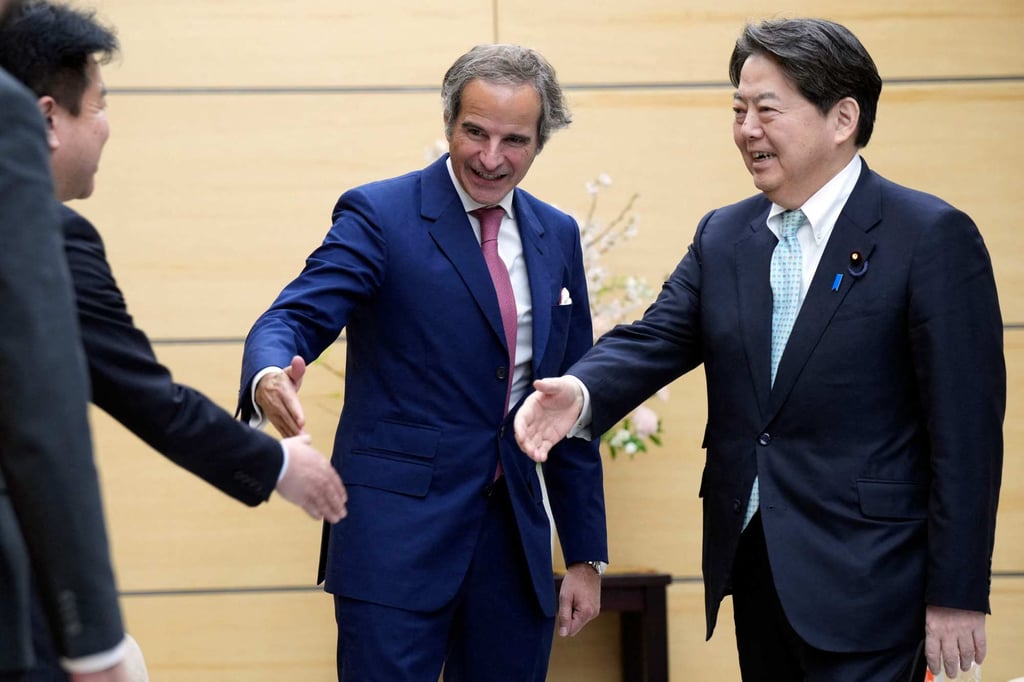
International Atomic Energy Agency director general Rafael Mariano Grossi (middle) introduces his staff to Japan’s Chief Cabinet Secretary Yoshimasa Hayashi (right) at the prime minister’s office in Tokyo. Photo: AFP

A massive earthquake and tsunami in 2011 damaged the Fukushima plant’s power supply and reactor cooling functions, triggering triple meltdowns and causing large amounts of radioactive waste water to accumulate. After more than a decade of clean-up work, the plant began discharging the water after treating it and diluting it with large amounts of seawater on August 24, starting a process that is expected to take decades.

Advertisement
The discharges have been strongly opposed by fishing groups and neighbouring countries, including China, which banned all imports of Japanese seafood immediately after the release began.
Advertisement
Select Voice
Select Speed
1.00x