Japan scientists uncover hundreds of huge desert doodles in Peru using AI
The Nazca lines, massive etchings on the desert floor depicting animals, plants and imaginary beings, have fascinated scientists for decades

The fabled Nazca lines, a series of massive incisions on the desert floor depicting animals, plants, imaginary beings and geometric figures, have fascinated scientists ever since they were first discovered around a century ago.
Best viewed from the air, the lines situated some 220 miles (350km) south of Lima are one of Peru’s top tourist attractions.
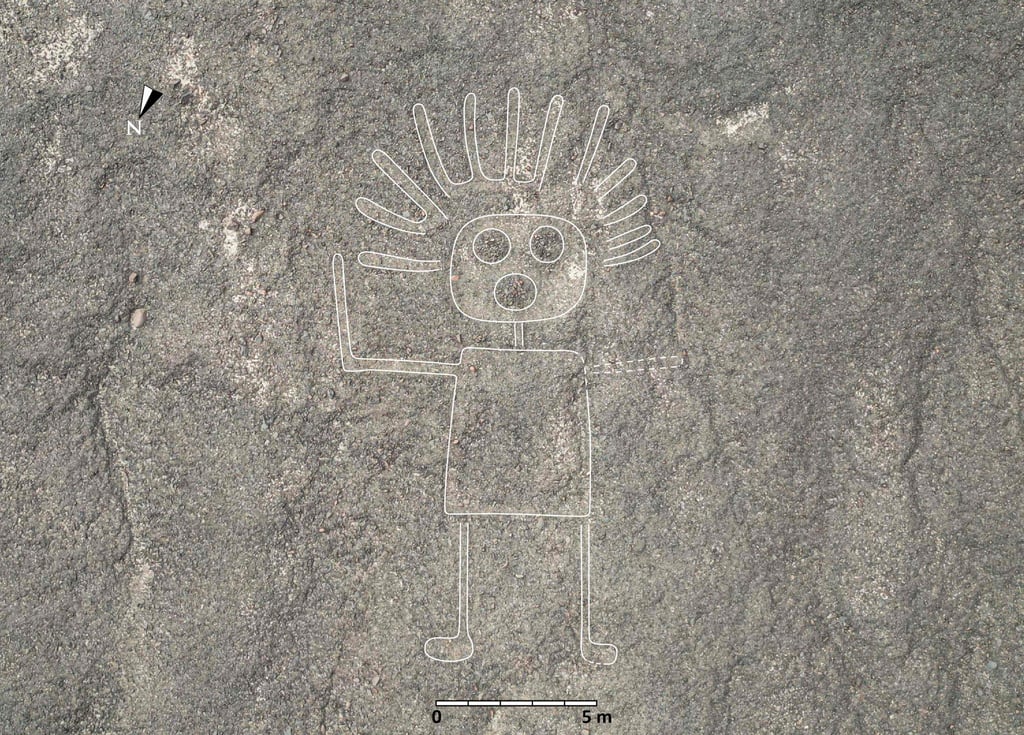
Announcing the new discoveries in Lima on Monday, archaeologist Masato Sakai, from Yamagata University, said: “The use of AI in research has allowed us to map the distribution of geoglyphs in a faster and more precise way.”
He said the findings were the fruit of collaboration between his university’s Nazca Institute and the research division of the technology company IBM.
“The traditional method of study, which consisted of visually identifying the geoglyphs from high-resolution images of this vast area, was slow and carried the risk of overlooking some of them,” he added.
The study was also published on Monday in the prestigious Proceedings of the National Academy of Sciences journal, describing how AI can be used to accelerate discoveries in archaeology even in well-known sites.
The paper said it had taken nearly a century to discover 430 figurative Nazca geoglyphs.