Nagasaki marks 80th atomic bombing anniversary as survivors count on youth to preserve peace
Survivors put their hopes of achieving nuclear weapons abolition in the hands of younger people, saying memories of the bombing must be preserved

Nagasaki is marking the US atomic attack on the southern Japanese city 80 years ago and survivors are working to make their hometown the last place on earth hit by the bomb.
The atomic bomb dropped by the United States on Nagasaki on August 9, 1945, killed some 70,000 people, three days after the bombing of Hiroshima killed 140,000. Japan surrendered on August 15, 1945, ending World War II and the country’s nearly half-century of aggression across Asia.
About 2,600 people, including representatives from more than 90 countries, attended a memorial event on Saturday at Nagasaki Peace Park, where Mayor Shiro Suzuki and Prime Minister Shigeru Ishiba spoke. At 11.02am local time, the exact time when the plutonium bomb exploded above Nagasaki, participants observed a moment of silence as a bell rang.
Dozens of doves, a symbol of peace, were released after a speech by Suzuki, whose parents are survivors of the attack. He said the city’s memories of the bombing were “a common heritage and should be passed down for generations” in and outside Japan.
“The existential crisis of humanity has become imminent to each and every one of us living on Earth,” Suzuki said. “In order to make Nagasaki the last atomic bombing site now and forever, we will go hand-in-hand with global citizens and devote our utmost efforts toward the abolition of nuclear weapons and the realization of everlasting world peace.”
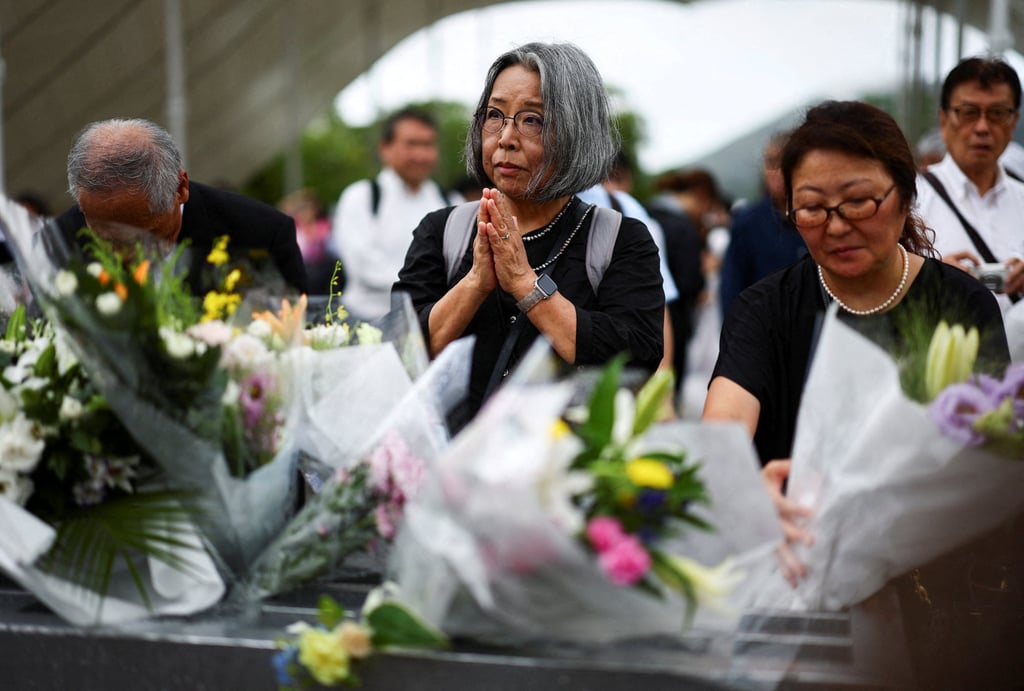
Survivors and their families gathered on Saturday in rainy weather at Peace Park and nearby Hypocentre Park, located below the bomb’s exact detonation spot, hours before the official ceremony.
“I simply seek a world without war,” said Koichi Kawano, an 85-year-old survivor who laid flowers at the Hypocentre monument decorated with colourful paper cranes and other offerings.