Japan Nobel winner hopes prize advances cancer and transplant treatment
Shimon Sakaguchi won the 2025 Nobel Prize in Medicine for research on the immune system and the prevention of serious autoimmune diseases

Shimon Sakaguchi, the Japanese immunologist who won this year’s Nobel Prize in medicine, said on Monday he hoped the award would help further advance research and patient care.
“I sincerely hope that this award will serve as an opportunity for this field to develop further … in a direction where it can be applied in actual bedside and clinical settings,” Sakaguchi, a 74-year-old distinguished professor at Osaka University, told a news conference.
Sakaguchi was jointly awarded the 2025 Nobel Prize in Medicine alongside American scientists Mary Brunkow and Fred Ramsdell for their research into how the immune system is kept in check by identifying its “security guards”, the Nobel jury said.
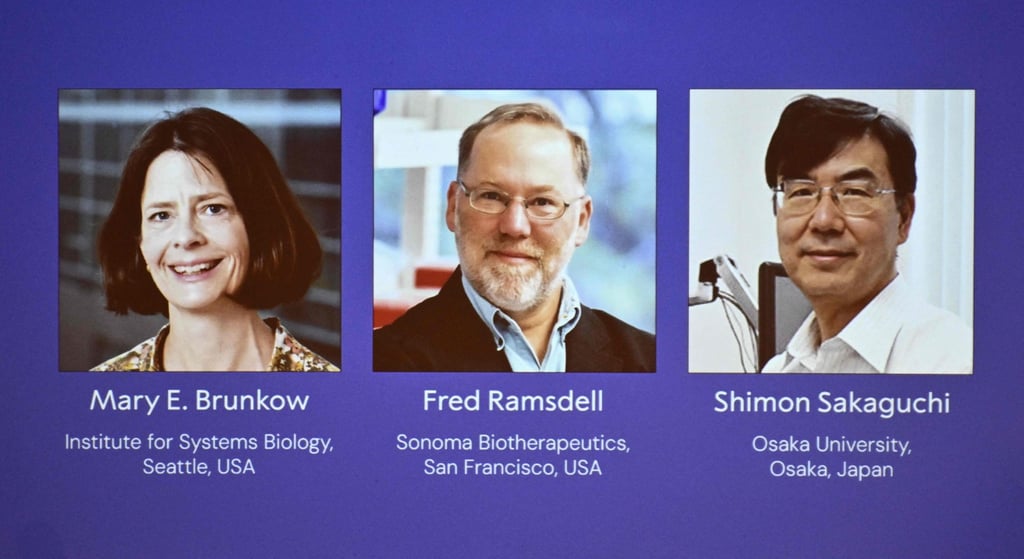
Their discoveries have been decisive for understanding how the immune system functions and why we do not all develop serious autoimmune diseases.
The trio’s work has paved the way for new treatments for autoimmune diseases, cancer, and organ transplant rejection.
Sakaguchi explained that further studies of the human immune system, both enhancing and suppressing it, could lead to prevention methods and treatments for diseases such as cancer and rejection in organ transplant cases.
“I believe that even for diseases that are currently difficult to treat, solutions exist, effective treatments will inevitably be found, and preventive measures will also be discovered,” he said.