Top Indian court upholds legality of world’s largest biometric database
‘Aadhaar’ system is used for everything from opening bank accounts to government services, but critics argue it could be breached, noting several leaks of personal information

India’s Supreme Court has upheld the legality of the government’s Aadhaar system, the world’s largest biometric database containing the personal information of more than a billion Indians.
A five-judge bench at India’s top court laid down stringent new limits on how Aadhaar information could be used but said the benefits of the system outweighed any risks to privacy.
However, it cannot be made mandatory for opening bank accounts or providing mobile-phone connections, Justice A.K. Sikri told the courtroom, but it is required for Indians paying income tax.
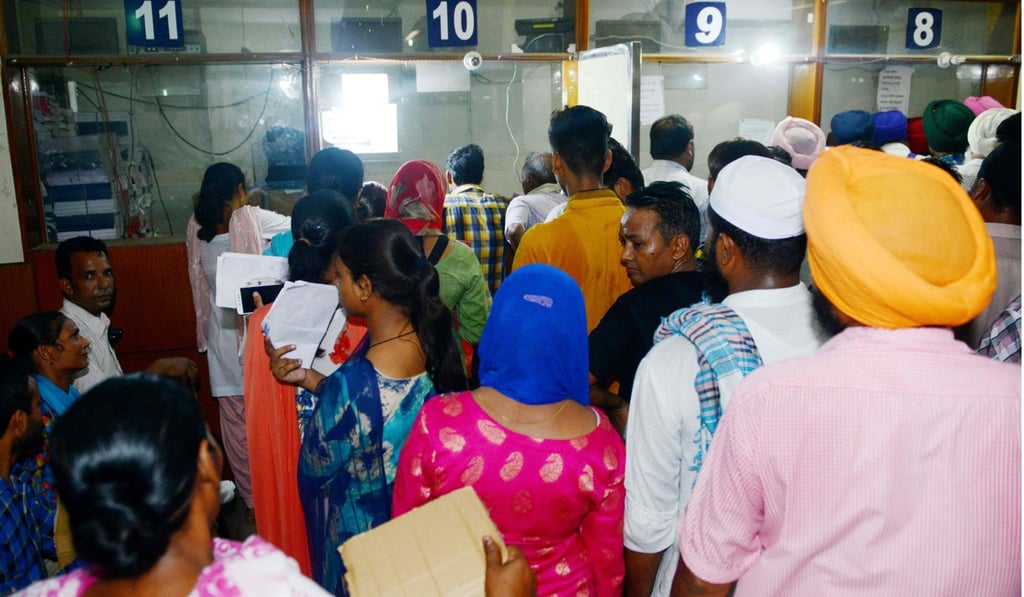
The decision on Wednesday settles several major questions that have hung over the Aadhaar in the decade since it was first proposed by the previous Congress government and then vastly expanded by current prime minister Narendra Modi.
“I think this is a fabulous judgment,” said lawyer Kapil Sibal, a member of the Congress party, who had argued in court against the sweeping use of Aadhaar as a means of identification. “It takes care of citizens’ rights and it ensures we don’t have a surveillance state in place, it ensures that our privacy is not intruded into, and at the same time, it protects the rights of the marginalised.”