India’s 300km/h bullet train project was seen as a big win for Japan over China. But it’s stuck in the slow lane
Land acquisition for the US$15 billion project is moving at a snail’s pace

India’s bullet train project is moving at the pace of a commuter train instead.
A year after the project was begun, only 0.9 hectare of land have been acquired out of the 1,400 hectares needed, according to the Indian government company leading the project. The US$15 billion project, the highlight of Prime Minister Narendra Modi’s drive to upgrade infrastructure, is facing resistance from farmers unhappy with the compensation for land taken away from them.
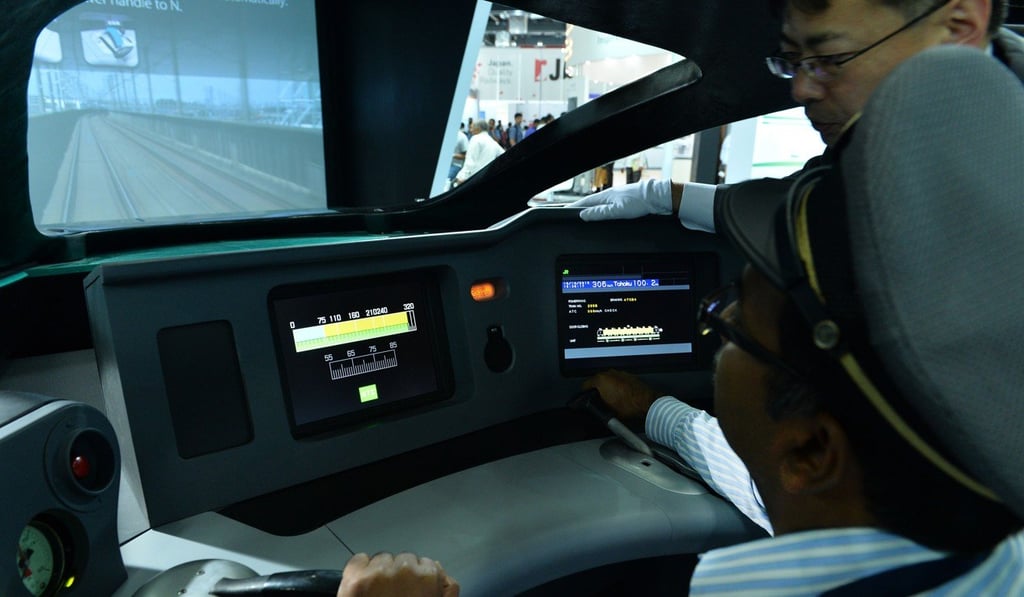
The planned 500km line linking the financial capital of Mumbai with the economic hub of Ahmedabad was meant to be a big leap from the trains of Indian Railways, Asia’s oldest network with more than 165 years of history. At the current rate of land acquisition, the 300km/h bullet train built with Japan’s “Shinkansen” technology risks missing its 2023 completion target.
“Land acquisition is a very common problem in India and many projects are delayed, there’s no question about that,” said Raghbendra Jha, an economics professor at the Australian National University. “I’ve seen many instances like this.”
The protests highlight the challenge Modi faces in establishing his flagship projects across railways, ports and airports to cement India’s position as the world’s fastest-growing economy. Projects worth 754 billion rupees (US$10.2 billion) were completed in the quarter ended September, less than half of the targeted 2 trillion rupees, according to the Centre for Monitoring Indian Economy.