Advertisement
India
AsiaSouth Asia

‘They want to be left alone’: why the survival of India’s mysterious Sentinelese island tribe relies on world staying away

  • They have been isolated for thousands of years, using spears and bows and arrows to hunt and defend themselves
  • So remote and private, nobody knows exactly how old the tribe is, what language they speak or how many there

Reading Time:2 minutes
Why you can trust SCMP
In this handout photo provided by the Indian Coast Guard and Survival International and taken on December 28, 2004, a man with the Sentinelese tribe aims his bow and arrow at an Indian Coast Guard helicopter as it flies over North Sentinel Island in the Andaman Islands, in the wake of the 2004 Indian Ocean tsunami. - Members of one of the world's last tribes untouched by modern civilisation have killed an American who ventured illegally onto their remote island, Indian police said November 22, 2018. (Photo by Handout / various sources / AFP) / -----EDITORS NOTE --- RESTRICTED TO EDITORIAL USE - MANDATORY CREDIT "AFP PHOTO / INDIAN COAST GUARD / SURVIVAL INTERNATIONAL " - NO MARKETING - NO ADVERTISING CAMPAIGNS - DISTRIBUTED AS A SERVICE TO CLIENTS
Associated Press

For thousands of years, the people of North Sentinel Island have been isolated from the rest of the world.

They use spears and bows and arrows to hunt the animals that roam the small, heavily forested island, and gather plants to eat and to fashion into homes. Their closest neighbours live more than 50km away. Deeply suspicious of outsiders, they attack anyone who comes through the surf and onto their beaches.

Police say that is what happened last week when a young American, John Allen Chau, was killed by islanders after paying fishermen to take him to the island.

Advertisement

“The Sentinelese want to be left alone,” said the anthropologist Anup Kapur.

Scholars believe the Sentinelese migrated from Africa roughly 50,000 years ago, but most details of their lives remain completely unknown.
Advertisement
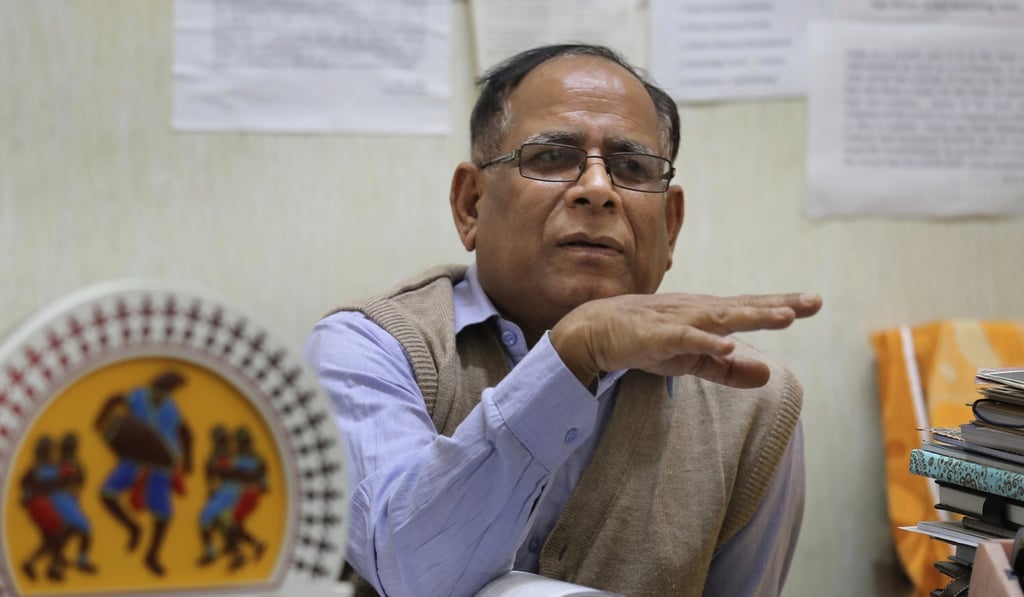
Anthropology professor at Delhi University P.C. Joshi. Photo: AP
Advertisement
Select Voice
Choose your listening speed
Get through articles 2x faster
1.25x
250 WPM
Slow
Average
Fast
1.25x