Inside the ‘rat hole’ mines where Indians risk their lives to find coal
- A recent collapse in minerals-rich Meghalaya has prompted a new reckoning over the illegal mines, which have a dangerous reputation for their suffocating narrow tunnels and lack of safety

Abdul Alim spent less than a week working inside the 370-foot-deep coal mine before deciding he had enough. The pit was too dangerous, the risk of flooding too great, the safety equipment nonexistent.
When a boss brought him and other workers to a market one evening to buy supplies, Alim told him he wanted to look for a belt. He and another miner slipped into the crowd and fled, hitching a ride and travelling 12 hours back home to their villages in northeastern India.
Three days later came news of what Alim had feared: the mine had collapsed and filled with water, trapping 15 workers.
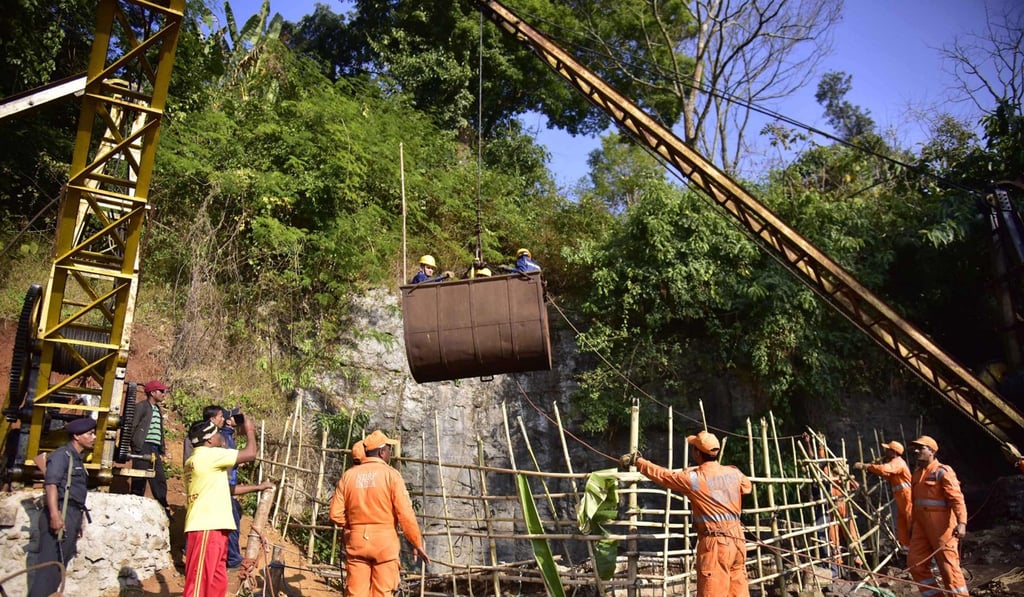
More than a month after the December 13 collapse, a rescue effort led by Indian navy divers and federal emergency management experts located one body floating deep inside the mine shaft – too badly decomposed to be retrieved – but found no sign of any others. Anguished family members presume that all 15 men are dead.
The disaster in Meghalaya – a rugged state rich in minerals, whose benefits have eluded most of its people – has prompted a new reckoning over “rat hole” mines, named for the suffocating narrow tunnels that miners plough into the hillsides to extract coal.