India’s famous Ganges funeral pyres fall silent amid coronavirus lockdown
- Typically, up to 300 bodies are brought daily to Varanasi from all around the country for cremation. Now barely 40 take place each day, all of them locals
- The usual teeming crowds of mourners, pilgrims and tourists in one of India’s holiest places are also eerily absent

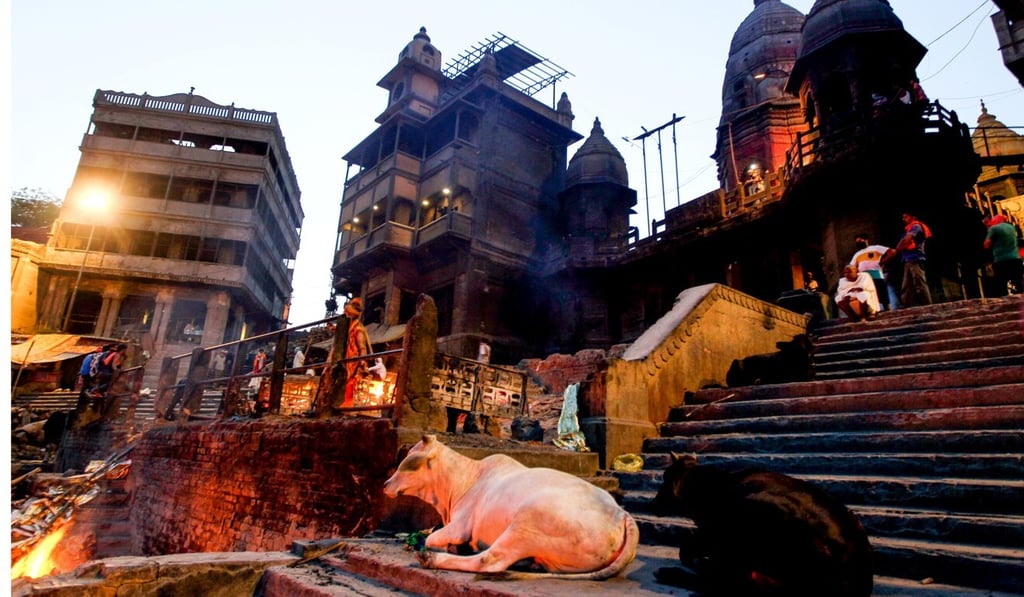
The stench of smouldering funeral pyres usually hangs heavy by the Ganges river in Varanasi, the mystical Indian city where Hindus believe being cremated will free them from the cycle of rebirth.
But because of a nationwide coronavirus lockdown, the 200 to 300 bodies from all over India and beyond that are typically cremated here daily cannot be transported to the city.
Now barely 30 to 40 funerals are taking place per day, all of them locals, and the usual teeming crowds of mourners, pilgrims and tourists in one of India’s holiest places are eerily absent.
“We still haven’t stopped working,” Jagdish Chaudhary, 51, said from Manikarnika, the main cremation “ghat” or embankment in Varanasi, reputedly one of the oldest cities on Earth.
“But none of us has experienced this drastic fall [in cremations] and deserted ghats along the river in our lifetimes.”