China border, Pakistan tensions hamper India’s plan to boost local weapons industry
- Prime Minister Narendra Modi aims to curb certain weapons imports to turn the world’s biggest arms importer into a defence manufacturing powerhouse
- But India is now trying to procure US$2 billion in military equipment amid a Himalayan border skirmish with China and tense relations with Pakistan
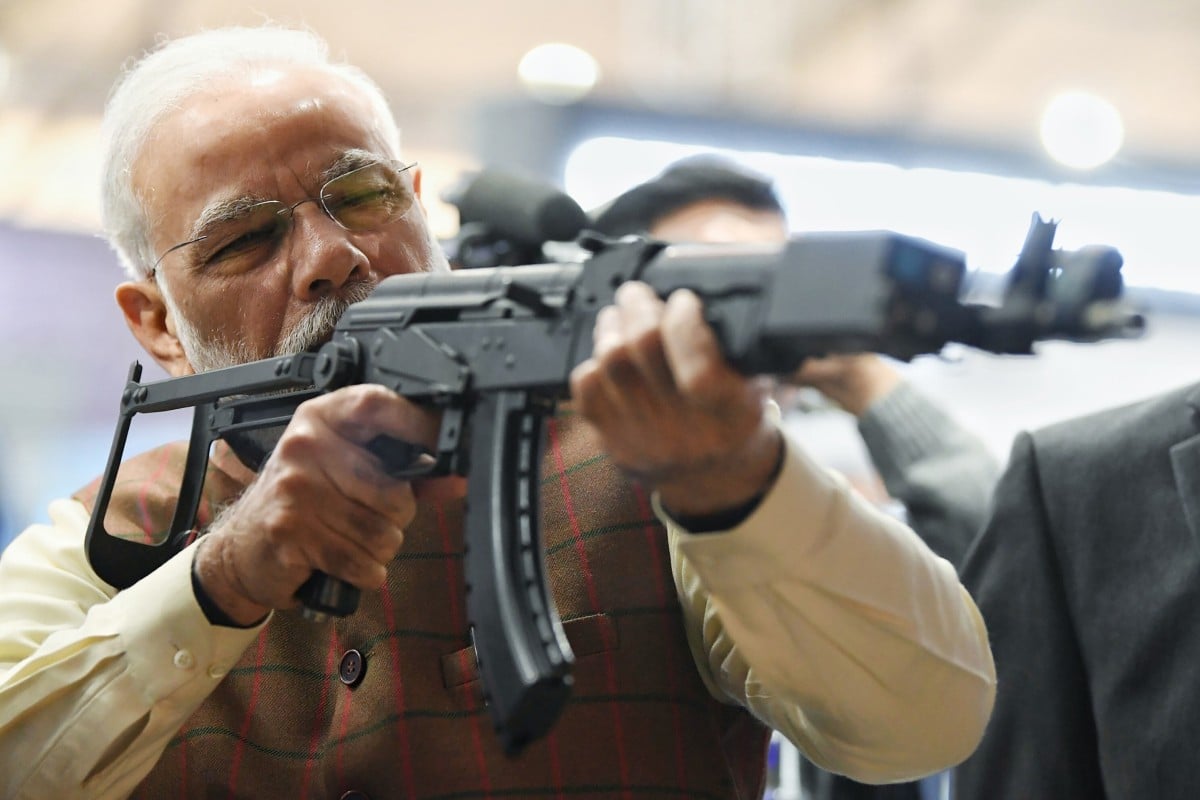
The new curbs on US$47 billion worth of imports that include communication satellites, conventional submarines and light machine guns, announced on August 9, failed to address critical issues such as the certification of systems and locally-made components, and will not prevent the military from making emergency purchases of equipment from foreign vendors, defence experts say.
“There is very little that the negative list of ammunitions, and assorted material banned by the Ministry of defence can do in addition to several measures already taken to localise defence production and reduce import dependency,” said Amit Cowsish, a consultant with the New Delhi-based Manohar Parrikar Institute For Defence Studies and Analyses and a former financial adviser on acquisitions in the Ministry of defence.
The scepticism is with reason. Similar policy declarations to stem imports were made by India in 2013, under then prime minister Manmohan Singh, and also by Modi’s administration in his first term in 2018, did not significantly increase the ‘Made in India’ products deployed by the military.