Sri Lanka rolls back reforms aimed at curbing authoritarianism in vote to boost president’s powers
- With the constitutional amendment, Gotabaya Rajapaksa will be able to hold ministries, appoint and sack ministers, and name members of commissions
- The changes reverse reforms dating to 2015 that aimed to limit presidential powers in a bid to prevent creeping authoritarianism

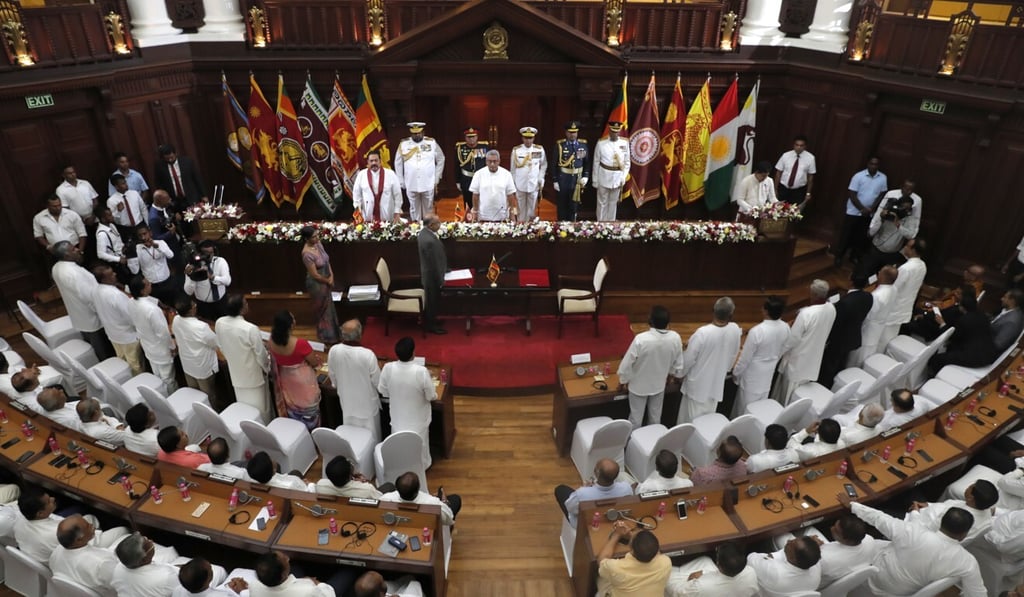
The 20th amendment to the constitution was passed late on Thursday with a 91-vote majority with 156 lawmakers in the 225-member parliament voting in favour. Sixty-five lawmakers voted against.
With the change, Rajapaksa will be able to hold ministries, as well as appoint and sack ministers. He will also be the appointing authority of the elections, public service, police, human rights, bribery or corruption investigation commissions.
These commissions were perceived as independent with a constitutional council comprising of lawmakers from different political parties and civil personalities making the appointments. With the amendment, the constitutional council is abolished for a parliamentary council whose observations the president is not bound to implement.
The president can also dissolve parliament after two years and six months of the legislature being elected instead of the previous law that prohibited him from dissolving parliament until six months before its five-year term ends.