Corpse-carrying female soldiers break taboos to help tackle Nepal’s coronavirus crisis
- Female soldiers are being deployed to handle bodies for the first time in the nation of 30 million, where women touching the dead is still a cultural taboo
- The army is responsible for managing the bodies of coronavirus victims across Nepal, where at least 1,508 people have died from Covid-19

Women touching a dead body is still a cultural taboo in Nepal. But rights for women have improved since the majority-Hindu country emerged from a decade-long conflict in 2006 and abolished its centuries-old feudal monarchy two years later.
The women carrying corpses in Kathmandu, all soldiers, are being deployed for the first time as the nation of 30 million people tries to manage the bodies of Covid-19 victims amid the growing pandemic.
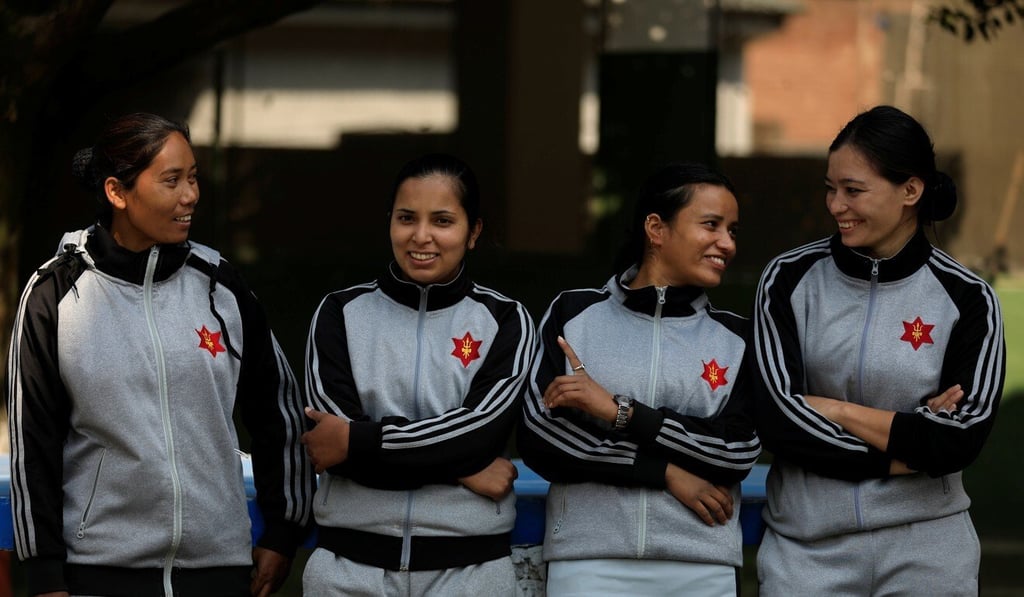
“I feel privileged and happy for being given a chance to do the work that was done only by the males so far,” said one of the women, a 25-year-old corporal named Rachana, who asked to only be identified by one name. “Society is changing … I have not been to my family since I started my new duty, but my friends are happy. They thank me and say, ‘You have performed a difficult task carefully and maintained your personal safety. Thank you’. I feel happy.”
On their first day on the job last month, the four moved six bodies from a hospital to a crematorium.