Hunger stalks India as lockdowns force hundreds of millions out of work, into poverty
- Some 529 million Indians were living on less than US$5 a day in October, a university study found – an increase of 230 million from March 2020
- Activists said the desperation for food among families with two wage earners, in particular, was ‘unprecedented’ as life savings are depleted

“I can’t sleep at nights,” said Chanchal from her home in Lal Gumbad Basti, a neighbourhood of migrant workers about 20 minutes away from the nation’s parliament. “I’m so tired of worrying about arranging the next meal.”
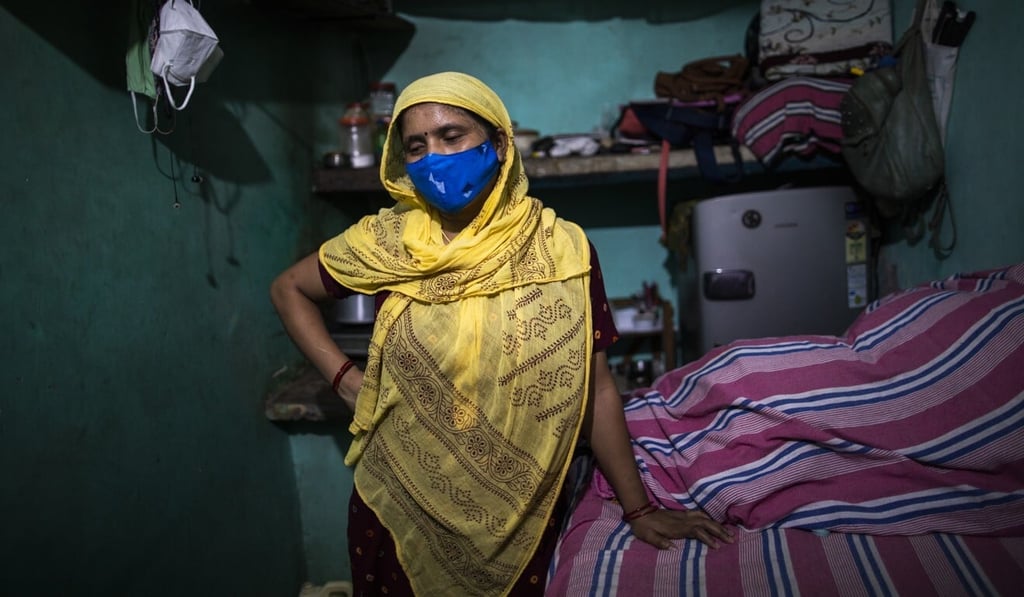
Families like Chanchal’s – two wage earners with some savings, living in rented accommodation – are among legions of Indians who saw their economic toehold ripped away in lockdowns over the last 12 months. More than 15 million Indians lost their jobs in May alone at the height of a devastating wave that overwhelmed hospitals and crematoriums, according to the Centre for Monitoring the Indian Economy.
All of that is leading to an increase in hunger, particularly in urban areas, in a nation that already accounts for nearly one-third of the world’s malnourished people. While few statistics are available, migrants and workers at food distribution centres in major Indian cities say they cannot remember seeing lines this long of people yearning for something to eat.