Sri Lanka’s new animal protection law bans ‘drunk-driving’ of elephants
- Many rich Sri Lankans keep elephants as pets but complaints of ill-treatment and cruelty are widespread, resulting in new measures to protect the animals
- Captive elephants must get biometric ID cards, and there are restrictions on their use in logging, in films, and in the tourism industry

Many rich Sri Lankans – including Buddhist monks – keep elephants as pets to show off their wealth, but complaints of ill-treatment and cruelty are widespread.
The new measures are aimed at protecting the animals’ welfare and include strict regulations around working elephants, as well as mandating a daily two-and-a-half-hour bath for each creature.
Official records show there are about 200 domesticated elephants in the South Asian nation, with the population in the wild estimated at about 7,500.
The new law will require all owners to ensure that animals under their care have new photo identity cards with a DNA stamp.
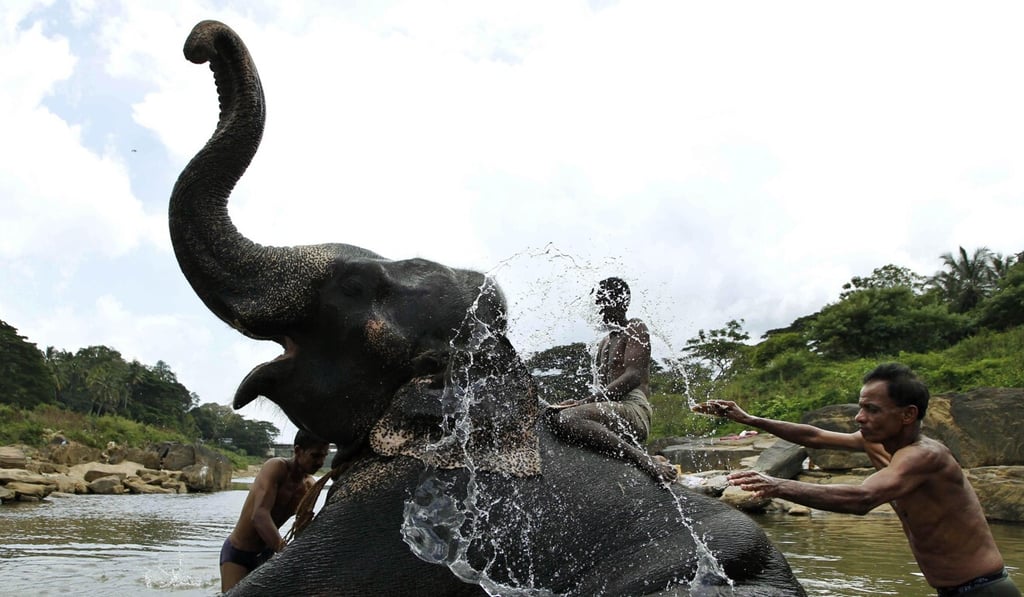
It also brings in multiple regulations for working elephants. Baby elephants can no longer be used for work – even cultural pageants – and cannot be separated from their mothers.