Advertisement
Ice-age children’s handprints found in India could be some of world’s oldest art
- The impressions, likely of squished hands and sticky mud from children aged between 7 and 12, were preserved in limestone on the Tibetan Plateau
- David Zhang, a professor of geography at Guangzhou University in China, first discovered the prints while out on an expedition
2-MIN READ2-MIN

Fossilised handprints of children from nearly 200,000 years ago were discovered in India and believed to be some of the world’s oldest art – providing evidence of the earliest human ancestors from the ice age.
The impressions, likely of squished hands and sticky mud from children, were preserved in limestone and discovered on the Tibetan Plateau in South Asia, according to a study in the Science Bulletin journal. The children were believed to be between seven and 12.
The study’s authors believe the hand and footprints should be considered “parietal” art – which means prehistoric art. Not all of the study’s archaeologists would agree that the findings fully qualify as parietal, which is often used to describe paintings on cave walls and meaning something cannot move from place to place.
Advertisement
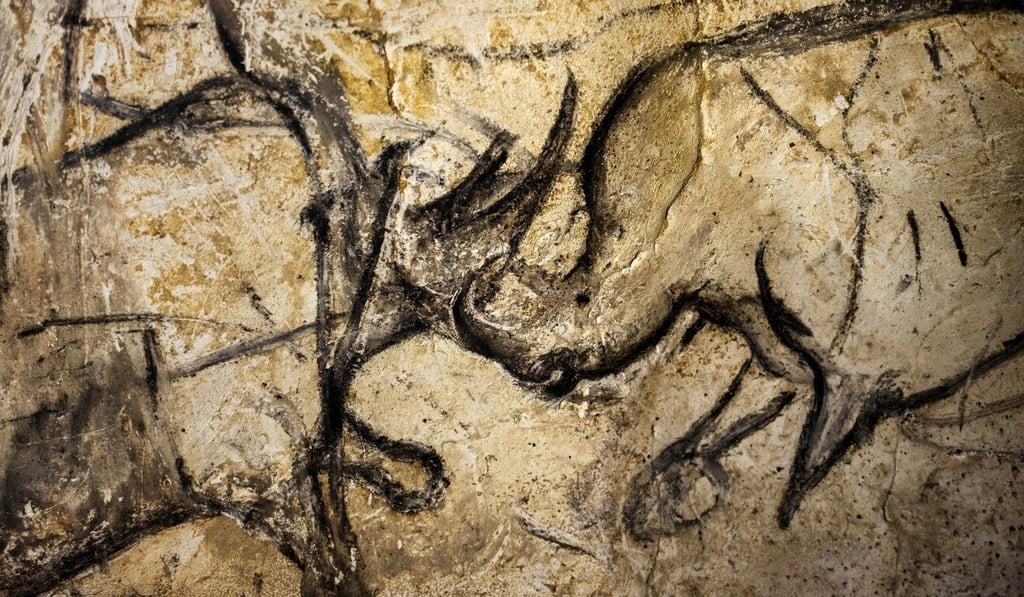
The oldest known examples of parietal art before the latest discovery were motifs and hand stencils found on the Indonesian island of Sulawesi and in the El Castillo cave in Spain. Those date back about 45,000 years ago, though, whereas the newly discovered fossils date way back further.
Advertisement
Study co-author David Zhang, a professor of geography at Guangzhou University in China, first discovered five handprints and five footprints on an expedition on the Tibetan Plateau. Zang and his co-authors dated the sample of the prints by assessing uranium. Based on the rate at which uranium decays, they are estimated to be about 169,000 to 226,000 years old – during the period known as the Pleistocene epoch.
Advertisement
Select Voice
Select Speed
1.00x