Pakistan lawmakers elect Shehbaz Sharif as new PM after Imran Khan ousted
- Sharif says forging a durable peace with India won’t be possible without a solution for the disputed Kashmir region
- He says his administration will speed up construction of the US$60 billion China-Pakistan Economic Corridor, which is part of Beijing’s Belt and Road Initiative

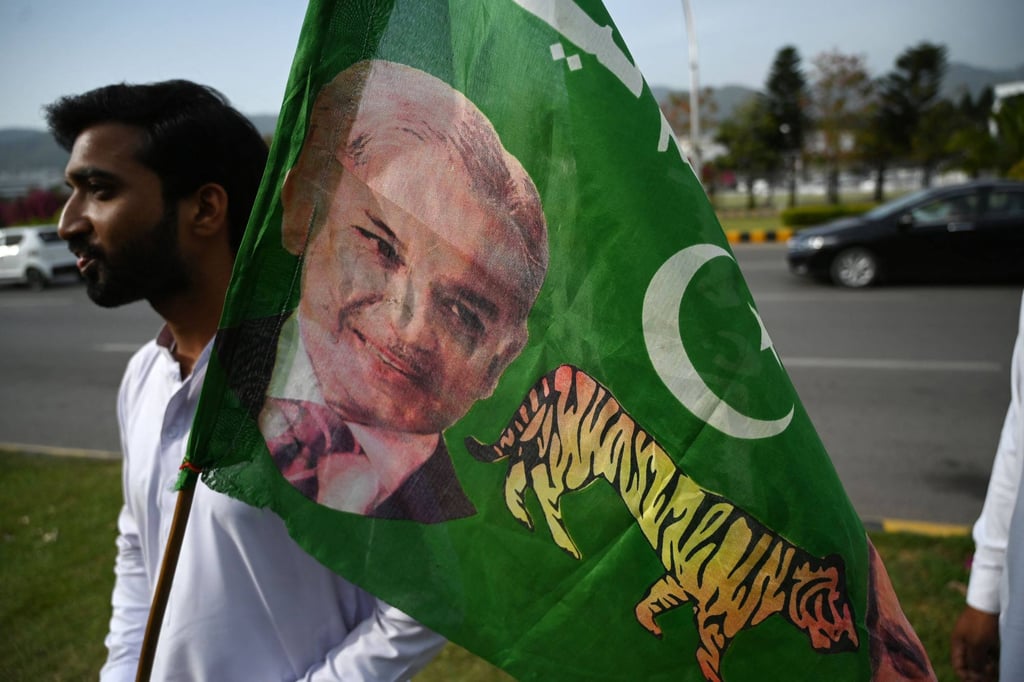
Pakistan’s parliament chose a more Western-friendly politician, Shehbaz Sharif, as prime minister on Monday, completing the ousting of predecessor Imran Khan in a political crisis that has sparked street protests and a mass resignation of lawmakers.
Sharif’s election brings to a close a week-long constitutional confrontation that reached its climax on Sunday when Khan lost a no-confidence vote, although the nuclear-armed nation is likely to remain prone to political and economic turbulence.
Sharif, 70, who has a reputation domestically as an effective administrator more than as a politician, is the younger brother of three-time prime minister Nawaz Sharif.
Analysts say Shehbaz, unlike Nawaz, enjoys amicable relations with Pakistan’s military, which traditionally controls foreign and defence policy in the country of 220 million people.
After the vote, Sharif vowed to tackle an economic malaise that has seen the rupee hit an all-time low and the central bank implement the biggest hike in interest rates in decades last week.
“If we have to save the sinking boat, what we all need is hard work, and unity, unity and unity,” he said in his maiden speech to parliament. “We are beginning a new era of development today.”
Just minutes before the vote, legislators from Khan’s party resigned en masse from the lower house of parliament in protest at the expected formation of a government by his political foes.