How Tata used ‘jugaad’ to become India’s EV leader
- By using frugal DIY innovation and workarounds, the company was able to re-purpose an existing petrol model to make an affordable electric car
- Competition from South Korea’s Hyundai Motor and Kia Motors is on its way, however, as India aims for 30 per cent of all cars to be EVs by 2030

The area, which could be mistaken for a prototype lab, initially made just eight SUVs a day. But demand has shot up over the two years since the Nexon EV’s launch. Tata now makes more than 100 a day, though much of that is now handled at another plant nearby.
Even with this humble start, which draws on India’s tradition of jugaad – a word referring to frugal DIY innovation and workarounds – Tata dominates the country’s fledgling electric car market.
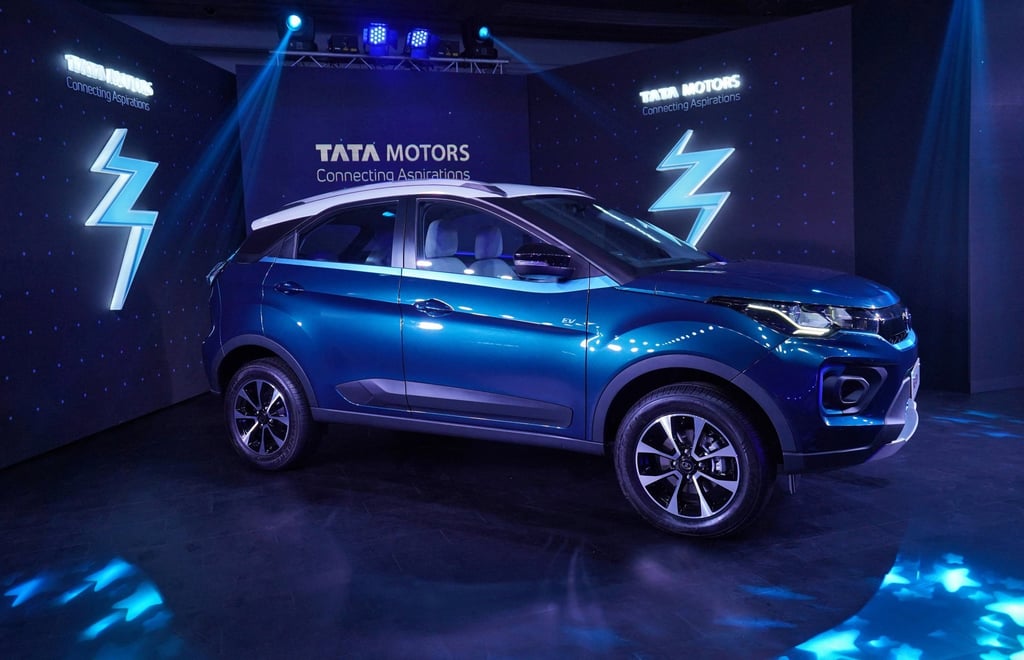
That contrasts sharply with other major carmakers which have poured billions of dollars into EV tooling and technology from the get-go, though Tata’s success also owes much to government subsidies and high tariffs that keep out imports from rivals like Tesla Inc.
Going into India’s untried market for EVs, Tata knew it had to make an affordable car for an extremely cost-conscious population. Instead of building an EV plant or line which would be expensive and take time, it decided to pick an existing successful model and work on outfitting it with a battery pack.
An EV plant for a nascent market would have been “a huge amount of investment sitting on the potential of emerging volumes. We didn’t want to do that,” said Anand Kulkarni, vice-president of product line and operations at Tata Passenger Electric Mobility.