Deadly South Asia heatwave a once-in-3,000-year event before climate change, experts say
- The heatwave, which has claimed at least 90 lives across India and Pakistan in recent months, was made 30 times more likely by climate change, scientists said
- ‘This is a sign of things to come,’ said one of the authors of the World Weather Attribution study, adding it could occur every 5 years if warming continues

Before the onset of human-caused climate change, the chances of such an event occurring would have been roughly once every 3,000 years, said senior author Friederike Otto, a scientist at Imperial College London’s Grantham Institute.
Global warming to date of 1.2 degrees Celsius (2.2 degrees Fahrenheit) has shortened the so-called return period for extreme heat of similar duration and intensity in South Asia to once-a-century, she and colleagues in the World Weather Attribution (WWA) consortium found.
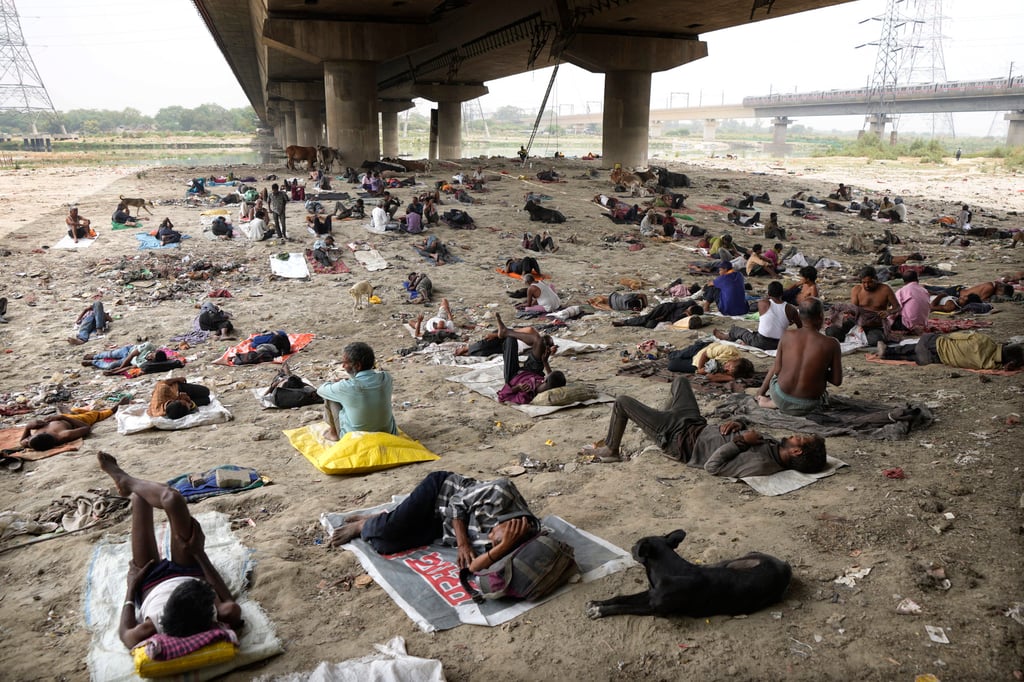
But as the planet continues to heat up, the interval between such killer heatwaves will shrink even further.
If warming increases to 2 degrees Celsius then heatwaves like this could occur twice in a century or even once every five years, said Arpita Mondal, a climate scientist at the Indian Institute of Technology in Mumbai, who was part of the study. “This is a sign of things to come,” she said.
A 2 degrees Celsius world is an unsettlingly plausible scenario: current national commitments to curb carbon pollution under the Paris Agreement would see global warming of 2.8 degrees.