-
Advertisement
Sri Lanka
AsiaSouth Asia

Why struggling Sri Lanka needs China, Japan and India to offer debt relief for IMF money to flow

  • The World Bank estimates that China accounts for US$7 billion, Japan US$3.5 billion and India US$1 billion of Sri Lanka’s US$63 billion external debt
  • To get Sri Lanka’s borrowings to a sustainable level Beijing, New Delhi, Tokyo, multilateral lenders and global asset managers must all swallow losses

Reading Time:3 minutes
Why you can trust SCMP
2
Workers wave China’s and Sri Lanka’s national flags to welcome a Chinese research and survey vessel to Hambantota port last month. Photo: AFP
Reuters
Sri Lanka’s International Monetary Fund bailout plan could be a turning point in its worst economic crisis, but far-from-stable politics and a need to get debt relief from competing powers China, India and Japan means some of the hardest work is still to come.
President Ranil Wickremesinghe knows a lot of circles will need to be squared for IMF’s US$2.9 billion lifeline to become a reality.

Spending cuts, tax hikes and debt writedowns are a common formula for bankrupt countries, but crisis veterans say there are some uniquely difficult elements here.
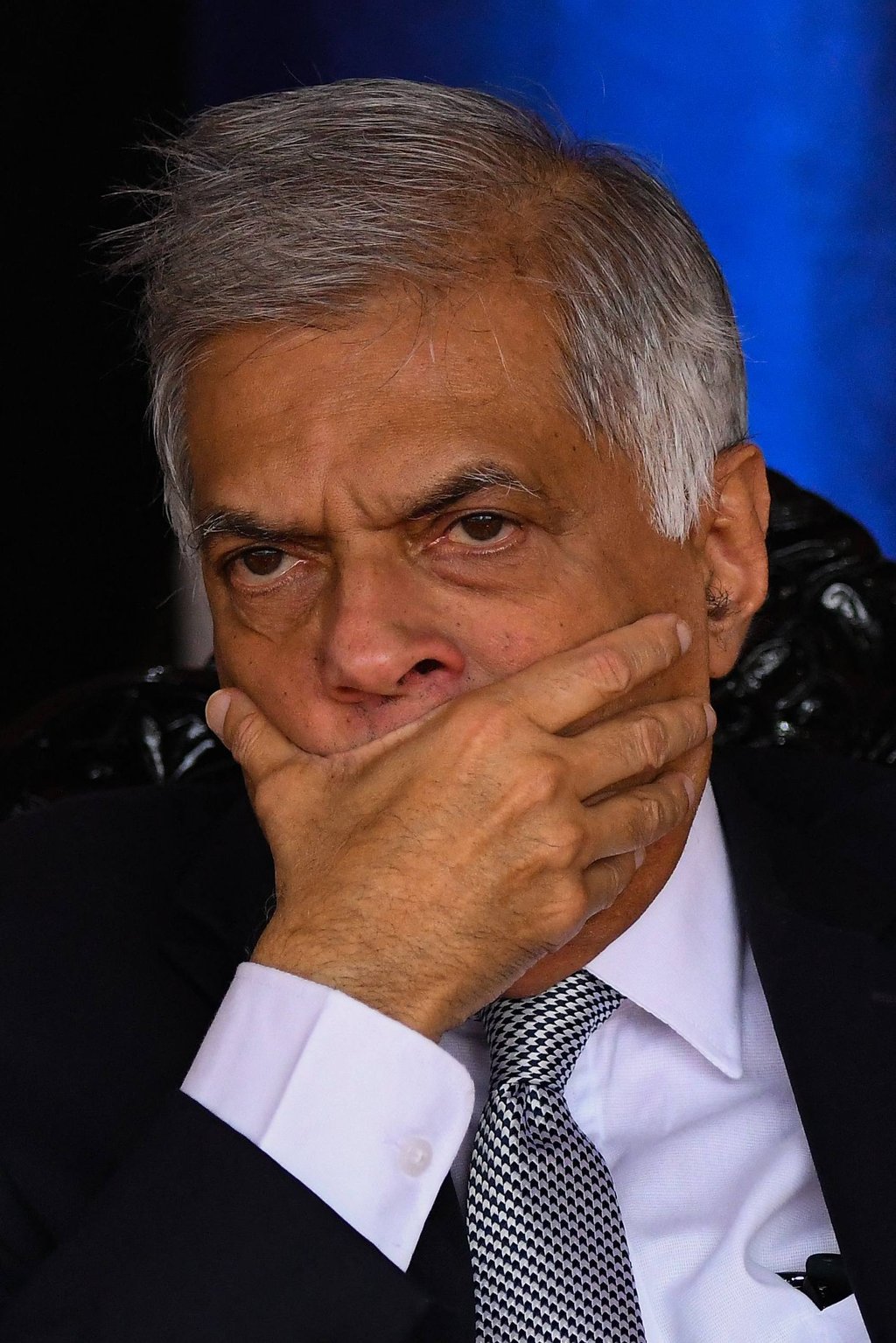
President Ranil Wickremesinghe faces a bristling opposition in Sri Lanka, as many among the impoverished population view him as too similar to his predecessor. Photo: AFP
An impoverished population that forced former President Gotabaya Rajapaksa to flee in July still needs to accept Wickremesinghe, seen by many as of the same political ilk and a man who faces a bristling opposition.
Advertisement

The country’s borrowings are so complex that estimates of the total range anywhere from US$85 billion to well over US$100 billion. To get it to a sustainable level Beijing, New Delhi, Tokyo, multilateral lenders and global asset managers must all swallow losses.

“This one of the biggest messes I’ve ever seen,” said Renaissance Capital’s chief economist Charles Robertson who has watched emerging market crises unfold for decades.

“The government destroyed its revenue base with unsustainable tax cuts, it tried to hold the currency when tourism revenues collapsed and now it has no reserves in the bank and a population facing widespread poverty.”

Advertisement
Select Voice
Select Speed
1.00x