Advertisement
Nepalese villagers flow into new settlement after water dries up
Climate change forces an entire Nepalese village to relocate after its vital water sources dry up
3-MIN READ3-MIN
Listen

The Himalayan village of Samjung did not die in a day.
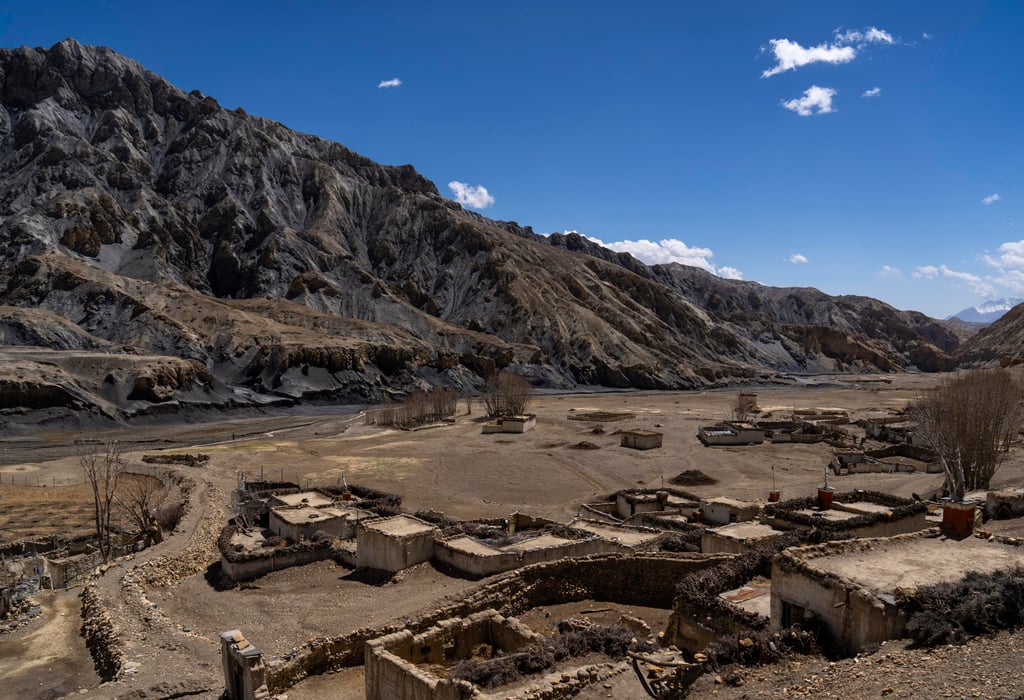
Perched in a wind-carved valley in Nepal’s Upper Mustang, more than 4,000 meters (13,000 feet) above sea level, the Buddhist village lived by slow, deliberate rhythms – herding yaks and sheep and harvesting barley under sheer ochre cliffs honeycombed with “sky caves” – 2,000-year-old chambers used for ancestral burials, meditation and shelter.
Then the water dried up. Snow-capped mountains turned brown and barren as, year after year, snowfall declined. Springs and canals vanished and when it did rain, the water came all at once, flooding fields and melting away the mud homes.
Advertisement
Families left one by one, leaving the skeletal remains of a community transformed by climate change: crumbling mud homes, cracked terraces and unkempt shrines.
The Hindu Kush and Himalayan mountain regions – stretching from Afghanistan to Myanmar – hold more ice than anywhere else outside the Arctic and Antarctic.
Advertisement
Advertisement
Select Voice
Select Speed
1.00x