Marawi: bullet-riddled walls tell true story of Philippines’ longest urban war
The battle for Marawi lasted more than four times longer than the US-led campaign to liberate Manila from Japanese second world war occupation forces

At first glance, the endless rows of devastated buildings could be the aftermath of a great earthquake. But the punctured, bullet-riddled walls tell the true story of the Philippines’ longest urban war.
“No one wanted this to happen,” President Rodrigo Duterte said on Tuesday as he declared Marawi city “liberated from the terrorists’ influence” after a nearly five-month battle with gunmen loyal to Islamic State.
A day earlier troops had tracked down and killed Islamic State “emir” for Southeast Asia – Isnilon Hapilon, leader of the militants.
The battle for the southern city, the Islamic capital of the mainly Catholic Philippines, lasted more than four times longer than the US-led campaign to liberate Manila from Japanese second world war occupation forces.
In the process the military literally destroyed Marawi to save it from gunmen it says are intent on carving out territory for a Southeast Asian caliphate.
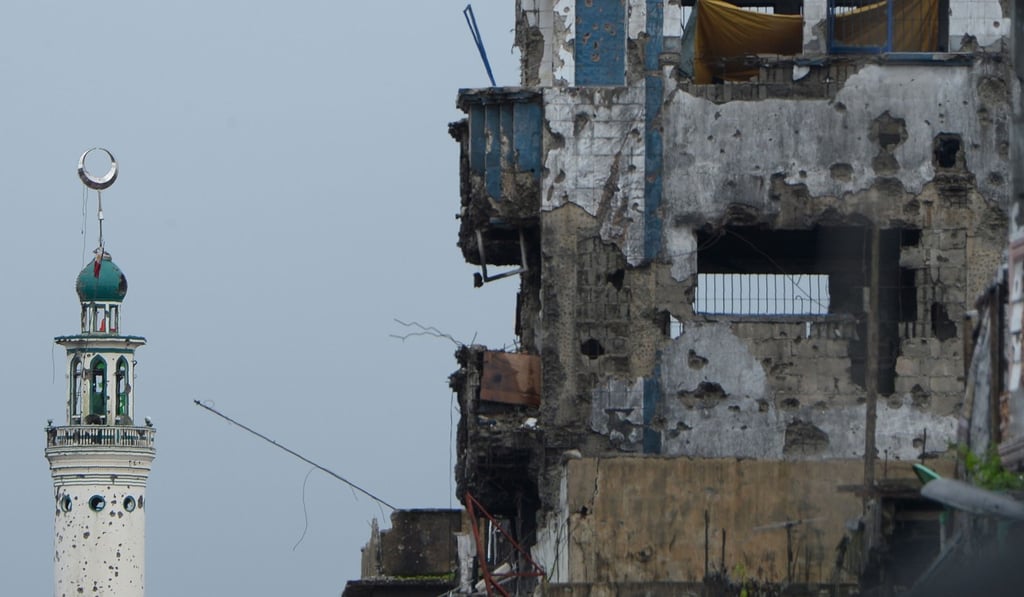
An AFP team saw metal shutters and walls pockmarked with bullet holes, pavements piled high with twisted metal and cannibalised cars, and streets strewn with machine-gun slugs.