Rohingya refugees revel in the new-found right to wear trousers
In camps in Bangladesh, Rohingya men are shedding sarongs and slipping into jeans, now free from restrictive rules imposed on Muslims in Myanmar

In 28 years, Abdul Aziz had never known the pleasure of wearing trousers.
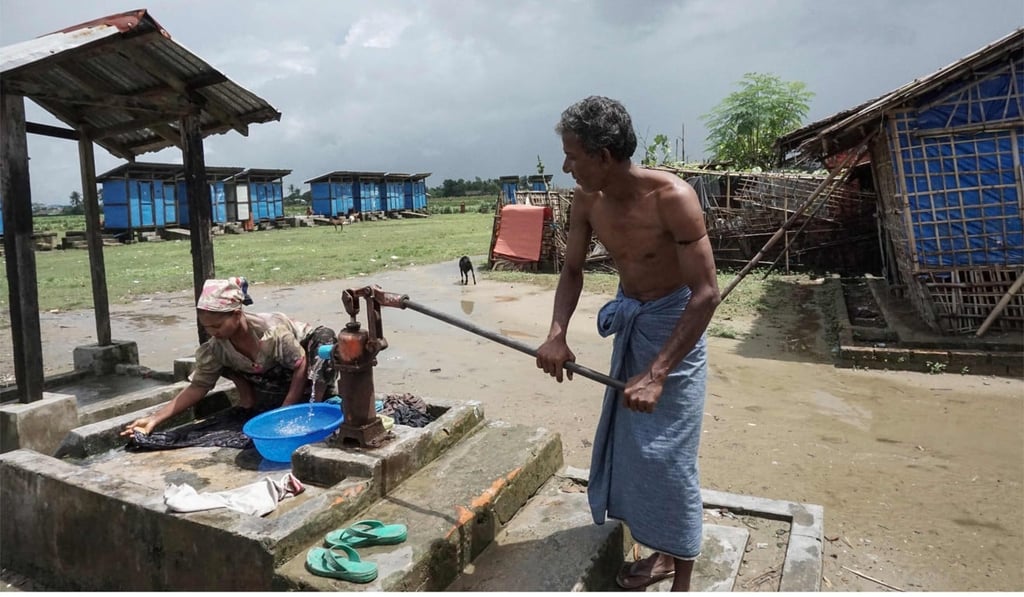
Rohingya Muslim men like him were restricted to wearing sarongs, or longyis, in Myanmar. It was an unofficial uniform that identified Muslims as inferior, Rohingya refugees said. Wearing trousers outside cities and towns was restricted by local authorities and Rohingya who did so could be arrested and fined.
More than 700,000 Rohingya fled Myanmar and crossed into Bangladesh after a violent military crackdown in August. In the refugee camps, they can wear what they like and the season’s must-have status symbol in these sprawling, squalid camps is trousers.
“Now, I live in a democracy,” Aziz said, “and in democracies, they wear trousers.”
On Saturday, the refugee camps buzzed with excitement for the festival of Eid, which marks the end of the Muslim holy month of Ramadan and for which Muslims traditionally buy new clothing. It was a rare day of celebration in a place where frugality is the norm.