Vietnam’s caged bears are dying out as price of bile plummets – because consumers now prefer the ‘wild’ alternative
Bear paws are popularly used as a delicacy in soup or liquor, while bones are used for cooking and teeth and claws for decoration or jewellery

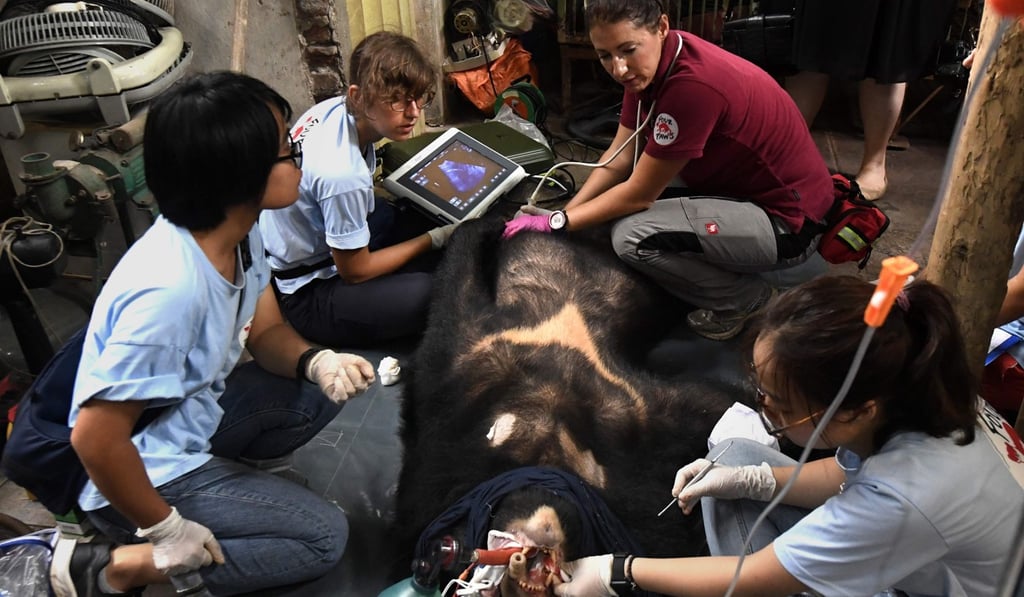
Two moon bears are gently removed from the cramped cages where they have been held for 13 years, rescuers carefully checking their rotten teeth and matted paws before sending them to their new home in a grassy sanctuary in northern Vietnam.
The animals are among the lucky few to be rescued in a country where hundreds of bears are feared to have been killed or starved to death as the cost of once-valuable farmed bile has plummeted.
Bear bile is extracted – often continuously and painfully – from the animals’ gallbladders and used in traditional medicine in Vietnam, where the illegal practice remains widespread. But consumers are shunning the farmed version in favour of bile taken from the nearly extinct wild bear population, which can cost 12 times more, and farmers can no longer earn what they used to from the illicit trade.
If consumer demand for wild bear gallbladders catches on, it could spell the end for wild bears, which are killed for the sought-after organ.
The trend is also bad news for caged bears, whose owners can no longer afford to keep them alive.