US defence chief James Mattis’ second trip to Vietnam aimed at countering China’s Asia influence
His trip originally was to include a visit to Beijing, but that stop was cancelled amid rising tensions over trade and defence

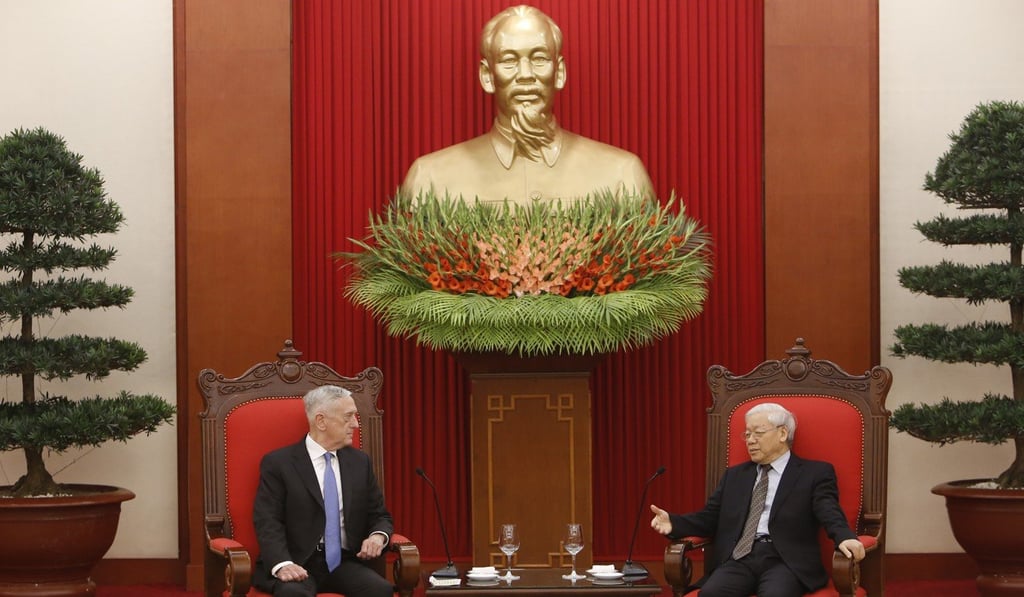
By making a rare second trip this year to Vietnam, Defence Secretary James Mattis is signalling how intensively the Trump administration is trying to counter China’s military assertiveness by cozying up to smaller nations in the region that share American wariness about Chinese intentions.
The visit beginning on Tuesday also shows how far US-Vietnamese relations have advanced since the tumultuous years of the Vietnam war.
Mattis, a retired general who entered the Marine Corps during Vietnam but did not serve there, visited Hanoi in January. By coincidence, that stop came just days before the 50th anniversary of the Tet Offensive in 1968. Tet was a turning point when North Vietnamese fighters attacked an array of key objectives in the South, surprising Washington and feeding anti-war sentiment even though the North’s offensive turned out to be a tactical military failure.
Three months after the Mattis visit, an US Navy aircraft carrier, the USS Carl Vinson, made a port call at Da Nang. It was the first such visit since the war and a reminder to China that the US is intent on strengthening partnerships in the region as a counterweight to China’s growing military might.
The most vivid expression of Chinese assertiveness is its transformation of contested islets and other features in the South China Sea into strategic military outposts. The Trump administration has sharply criticised China for deploying surface-to-air missiles and other weapons on some of these outposts. In June, Mattis said the placement of these weapons is “tied directly to military use for the purposes of intimidation and coercion.”