Nepal uses thousands of cameras to track wild tigers and finds their numbers are recovering after facing extinction
- Nepal’s tiger numbers hit rock bottom following the decade-long civil war, which ended in 2006
- In 2010, Nepal and 12 other countries with tiger populations signed an agreement to double their big cat numbers by 2022

Chayan Kumar Chaudhary flicked through photographs captured on a hidden camera in the jungle, hoping his favourite big cat – dubbed “selfie tiger” for its love of the limelight – had made another appearance.
Thousands of camera traps have helped conservationists track Nepal’s wild tiger population, which has nearly doubled in recent years as the big cats claw their way back from the verge of extinction.
After a nine-year push to protect tigers, an exhaustive census across 2,700km of Nepal’s lowlands completed earlier this year revealed the population has grown from 121 in 2009 to an estimated 235 adult cats today.
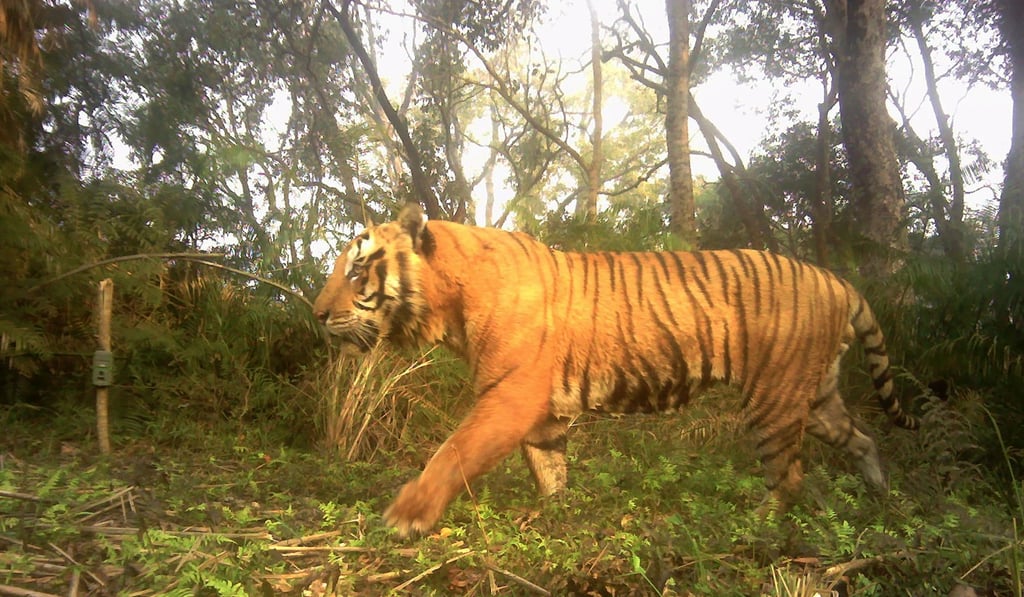
On the frontline of the painstaking survey were trained locals like Chaudhary in western Nepal’s Bardia National Park where tiger numbers have grown nearly fivefold. The 25-year-old helped track and record wild tiger movements through the park by scanning images taken by cameras hidden in the jungle’s undergrowth.
“It was very exciting when we checked the [memory] cards and found photos of tigers,” Chaudhary said. “It felt like we are part of something big.”