Malaysia bets big on durian as China goes bananas for world's smelliest fruit
- The Malaysian government is encouraging large-scale farming of durian, counting on a 50 per cent jump in exports by 2030
- Even property tycoons and companies in palm oil, Malaysia’s biggest agricultural export, are making forays into the business

The stinky, spiky durian is set to become Malaysia’s next major export as the Southeast Asian nation rushes to develop thousands of acres to cash in on unprecedented demand for the fruit from China.
Once planted in family orchards and small-scale farms, the durian, described by some as smelling like an open sewer or turpentine when ripe, is attracting investments like never before. Even property tycoons and companies in palm oil, Malaysia’s biggest agricultural export, are making forays into the durian business.
The Malaysian government is encouraging large-scale farming of durian, counting on a 50 per cent jump in exports by 2030.
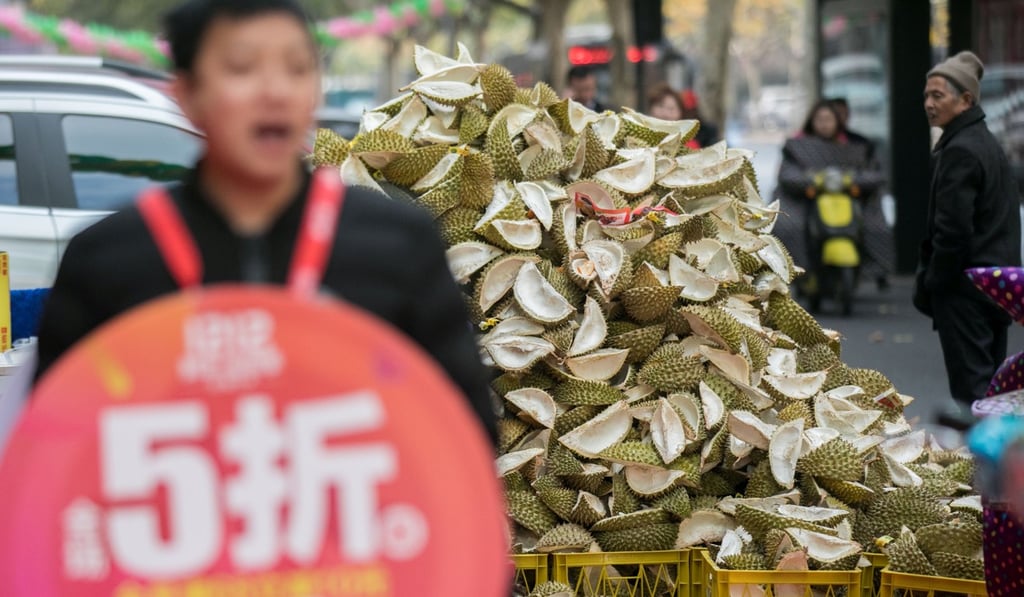
“The durian industry is transforming from local to global, large-scale farming due to the great demand from China,” said Lim Chin Khee, a durian industry consultant. “Before the boom, a durian farm in Malaysia would be a leisure farm … Now they are hundreds of acres and bigger, and many more will come.”
Durian may be banned in some airports, public transport and hotels in Southeast Asia for its pungent smell, but the Chinese are huge fans. Durian-flavoured foods sold in China include pizza, butter, salad dressing and milk.