Balangiga bells, seized by US forces as trophies after 1901 massacre, finally returned to Philippines
- The return of the bells has been divisive with some US veterans, who see them as a tribute to fallen American troops while the Philippines regards them as a symbol of its struggle for independence
- Manila’s push for the bells’ repatriation began in the 1990s and has had backing from Philippine presidents as well as from the Catholic church and historians

Church bells seized from the Philippines by the US as war trophies over a century ago were returned on Tuesday, in a bid to turn the page on a difficult chapter between the historical allies.
Returning the three so-called Balangiga bells meets a decades-old demand from the former US colony at a time when the two nations’ ties have been rattled by President Rodrigo Duterte’s pivot to China.
An American military plane delivered the bells to a Manila airfield, where Philippine and American officials gathered ahead of a symbolic handover ceremony.
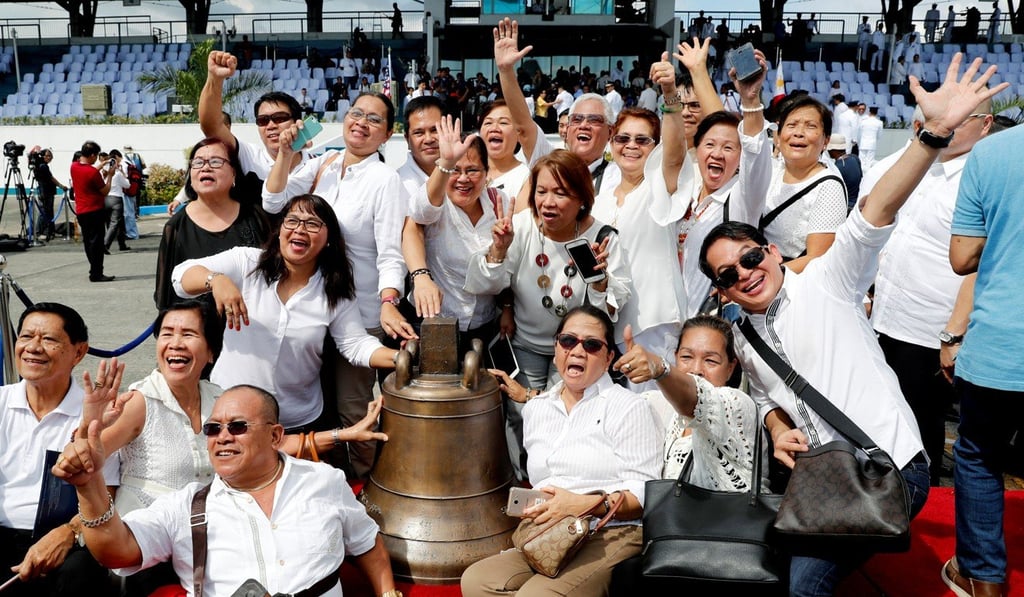
The bells were said to have signalled a surprise attack by machete-wielding Filipino revolutionaries that killed 48 US troops on September 28, 1901 in the central town of Balangiga.
In reprisal, the US commander Jacob Smith ordered the surrounding island of Samar be turned into a “howling wilderness” and that all Filipino males aged 10 or above be killed. Thousands of Filipinos were slaughtered, the town was razed and the bells were carted off as trophies. Two had been on display at a US airbase in Wyoming and the other in South Korea.
The return of the bells has been divisive with some US veterans and lawmakers, who see them as a tribute to fallen American troops while the Philippines regards them as a symbol of its struggle for independence.