Advertisement
How the sinking sands along the Mekong River are leaving Vietnamese residents homeless
- Damming and extensive sand mining of the riverbed are causing currents to strengthen and the land in Vietnam’s delta region to sink
- With the Mekong running through six different countries, there is very little cooperation between government to resolve the worsening crisis
4-MIN READ4-MIN

In the dead of night, the entire front half of shopkeeper Ta Thi Kim Anh’s house collapsed. Perched on the sandy banks of the Mekong River, it took just a few minutes for one half of everything she owned to plunge into its murky depths.
“Our kitchen, our laundry room, our two bedrooms, all gone,” said Kim Anh, speaking among the twisted metal and rubble of her house, from which she still sells eggs, soap and instant noodles to villagers in Ben Tre, a province in Vietnam’s Mekong Delta region.
“We’d be better off living in a cave instead,” said Kim Anh, who has used coconut husks and old tyres to reinforce the riverbank under her home.
Advertisement
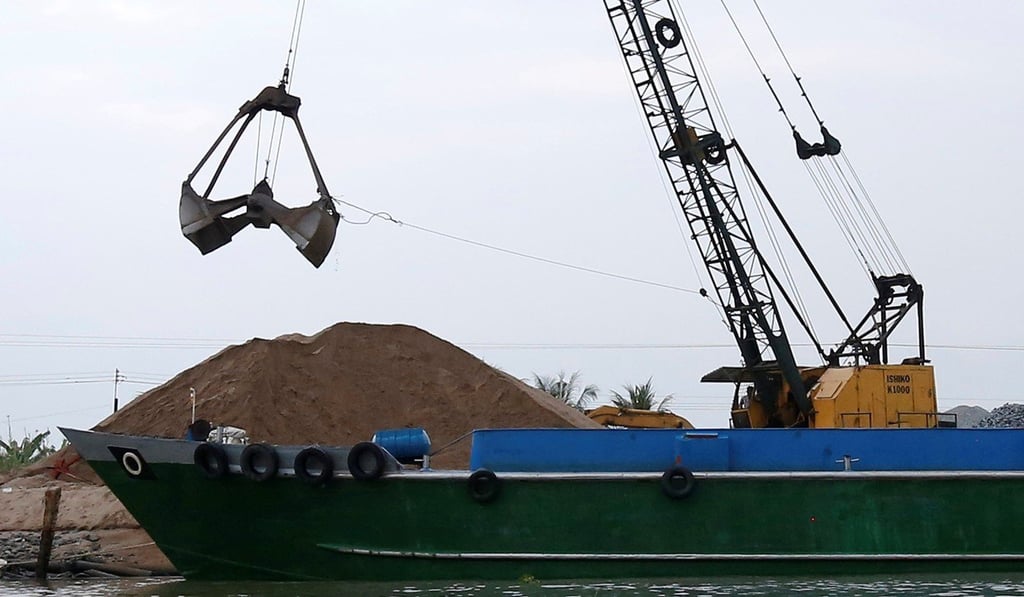
Upstream damming and extensive mining of the Mekong’s riverbed for sand is causing the land between the sprawling network of rivers and channels near the mouth of one of the world’s great rivers to sink at a pace of around 2cm (0.75 inches) a year, experts and officials said.
Advertisement
The 4,350km river, known as the Lancang in its upper reaches, flows from China’s Tibetan
Advertisement
Select Voice
Select Speed
1.00x