Will Thai junta use strict lèse-majesté laws to justify postponing general election for fifth time?
- Authorities have labelled pro-democracy protesters as troublemakers and warned them not to ‘cross a line’
- The junta has used sweeping Article 44 powers to suppress critics, remove independent organisations’ members and ban public gatherings

Thai protesters condemning the delay of the general election risk breaching the country’s strict lèse-majesté laws after military leaders criticised the demonstrators for being anti-royal in a veiled threat.
The People Who Want An Election pro-democracy group – which has held four protests in the past three weeks – has accused the junta of robbing people of their rights, as the general election, which was scheduled for February 24, looks likely to be delayed a fifth time.
The junta has in the past weeks indicated possible election dates of March 10, March 24 or even May 9, but “unless the government issues a royal decree announcing an election date, all talk about an election date is merely buying time”, said lawyer Anon Nampa, one of the activists of the group. “It is not about what day the election is to be held. It is about when an election will be announced into law.”
The junta, which came to power after it ousted the Yingluck Shinawatra administration in a bloodless coup in 2014, has insisted the election cannot be held too close to the coronation of the new king, scheduled for May 4-6. Critics claim the military is using the coronation as an excuse to postpone the election.
Army chief general Apirat Kongsompong, a staunch royalist, labelled the group troublemakers and warned them not to “cross the line” – a euphemism for breaking the lèse-majesté laws, which prohibit “royal insult”.
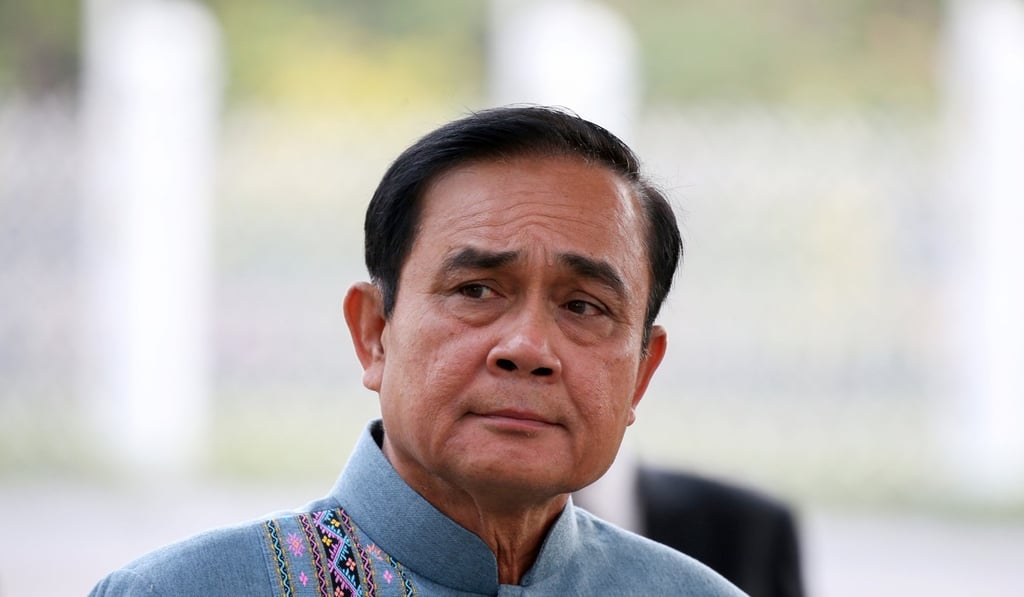
In Thailand, where the royal family is deeply revered, the accusation could divert attention away from the group’s cause – or worse, land them in jail. But the veiled threat did not deter the group from gathering at Bangkok’s Thammasat University last Saturday.
One of the protest leaders, political activist Sirawit Serithiwat, declared before a few hundred people that if a royal decree was not issued soon, the group would protest next at “the Government House, which has now become a thief’s lair”.