Advertisement
US fears China-backed resort in Cambodia could house military and ‘threaten coherence in Asean’
- The US$3.8 billion China-backed Dara Sakor development takes up 20 per cent of Cambodia’s coastline and plans a resort, international airport, power stations, a deep water port and industrial estate
- Officials familiar with the project say it could be part of a larger Chinese plan to establish a military presence in the strategically position Southeast Asian country
Reading Time:6 minutes
Why you can trust SCMP

Along pristine Cambodian beaches, past parades of elephants in its largest national park, sits an area half the size of Singapore that is raising alarm bells among military strategists in the US and beyond.
Dara Sakor, a US$3.8 billion China-backed investment zone encompassing 20 per cent of Cambodia’s coastline, is unlike any other in the developing Southeast Asian nation. Controlled by a Chinese company with a 99-year lease, it features phased plans for an international airport, a deep water seaport and industrial estate along with a luxury resort complete with power stations, water treatment plants and medical facilities.
The size and scope of the plans for Dara Sakor have fanned US concerns the resort could be part of a larger Chinese plan to base military assets in Cambodia, according to an official familiar with the situation. A naval presence there would further expand China’s strategic footprint into Southeast Asia, consolidating its hold over disputed territory in the South China Sea and waterways that carry trillions of dollars of trade.
It is not the first time China’s presence in Cambodia has raised alarms with the Trump administration. Vice-President Mike Pence last year wrote to Prime Minister Hun Sen expressing fears that Cambodia might be planning to host Chinese equipment at another nearby location, the Ream Naval Base, which officials in Phnom Penh have repeatedly denied.
Advertisement
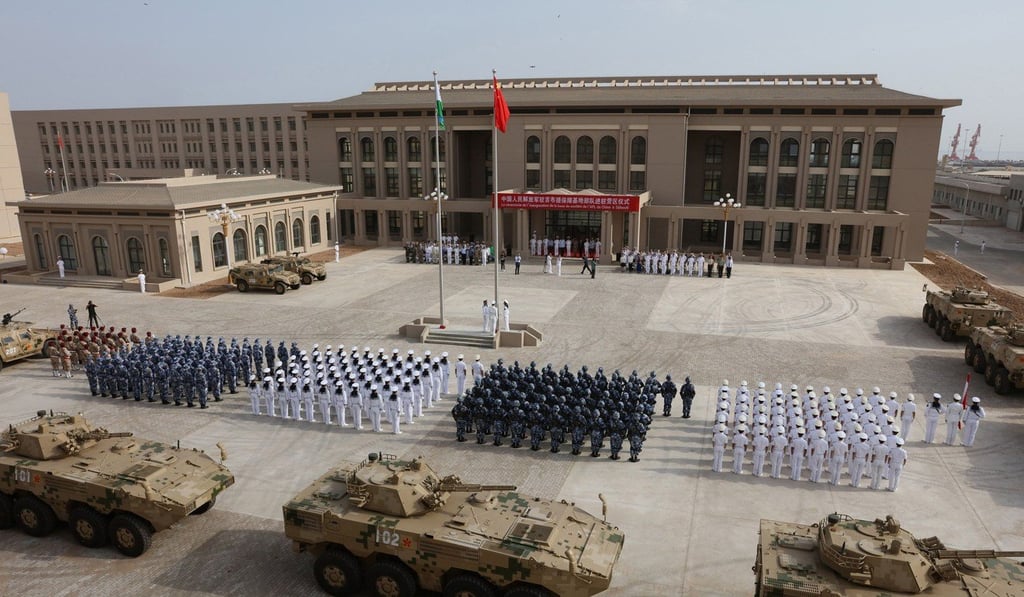
More broadly, the US suspects that President Xi Jinping’s signature Belt and Road Initiative to build ports and other strategic infrastructure in places such as Sri Lanka, Pakistan and Myanmar will pave the way for China to set up more military bases overseas after establishing its first one in Djibouti two years ago. Cambodia, which gets three-quarters of its investment from China, has increasingly been Beijing’s most reliable partner in Southeast Asia.
Advertisement
“If you have a naval base in Cambodia it means the Chinese navy has a more favourable operational environment in the waters surrounding Southeast Asia,” said Charles Edel, a former State Department official who is now a senior fellow at the United States Studies Centre at the University of Sydney.
Advertisement
Select Voice
Choose your listening speed
Get through articles 2x faster
1.25x
250 WPM
Slow
Average
Fast
1.25x