Thai farmers make cosmetics from rubber to offset China’s slowing demand for tyres
- Industry turning to alternative uses, including anti-ageing creams and erosion prevention technology, as vehicle sales fall in world’s top consumer

Condoms and car tyres helped make Thailand a US$6 billion latex powerhouse. Now, the industry wants to plaster the plant material on faces and use it to stop coastal erosion in a makeover designed to keep more rubber profits at home.
Thai rubber, which has traditionally ended up in foreign tyres, gloves, and other manufactured products, is reeling from slowing car sales in China, the world’s top consumer. International futures prices for the commodity are up 13 per cent this year after sliding in five of the previous six years.
Thailand, the world’s biggest rubber producer and exporter, is trying to buffer that impact by promoting alternative uses, from erosion prevention to anti-ageing creams. The country produces more than a third of the world’s natural rubber, with about 80 per cent exported as a lower-value commodity.
“We shouldn’t just export rubber any more,” said Sunan Nuanphromsakul, acting governor of the Rubber Authority of Thailand, a regulatory agency, in an interview in Bangkok. “Processing it locally is crucial to adding more value.”
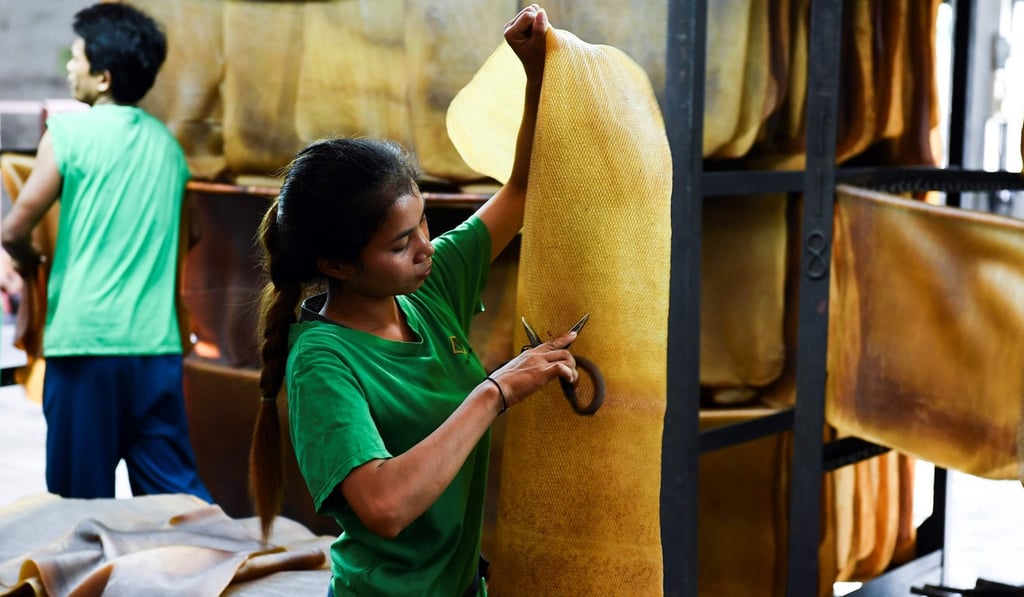
Already, the country has benefited from the relocation of tyre-manufacturing from China, and aims to expand its domestic use as a cushioning base for playgrounds, and in rural road surfaces.