Boxing Day tsunami devastated Banda Aceh but 15 years later, have Indonesians learned from the tragedy?
- More than 25,600 residential, commercial, government and school buildings are inside the high-risk area, which was almost completely wiped out in 2004
- Lax law enforcement, a shortage of government resources and reluctance on the part of survivors to leave the coast mean threat remains

Fifteen years on, Munandar and tens of thousands of others have been allowed to rebuild in the same low-lying areas of Banda Aceh despite continuing risks of tsunami and other coastal hazards like flooding. Officials and experts say it’s because of lax law enforcement, a lack of government resources for relocation, and an entrenched reluctance on the part of many survivors to abandon their lives and livelihoods near the coast.
More than 25,600 residential, commercial, government and school buildings are inside the high-risk area, which was almost completely wiped out in 2004, according to analysis of city data. City officials say about 50,000 people live there today – nearly the same as in 2004.
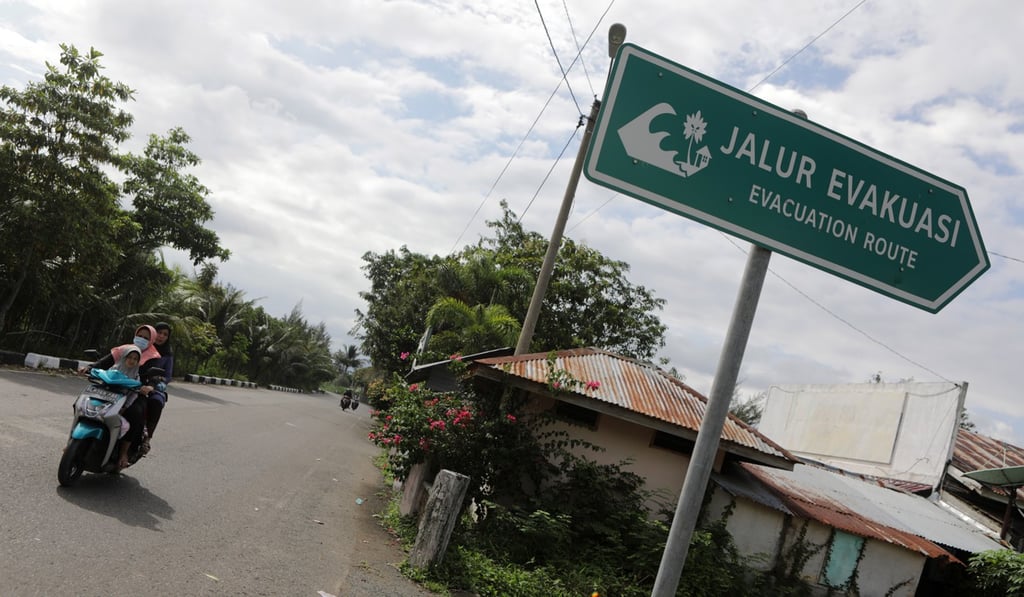
Immediately after the disaster, the government considered banning construction within a 2km coastal buffer zone. But the plan was dropped after communities, many dependent on fishing, took to the streets to protest such attempts to move them away from their ancestral lands and livelihoods.