Advertisement
Coronavirus: Singapore’s migrant workers remain segregated, weeks after new cases among them dropped to near zero
- Most workers remain confined to their dormitories, only able to mix with the wider community on ‘essential errands’ after requesting permission
- The government is concerned that, until vaccination is widespread, dormitories remain potential sites for a fresh outbreak
5-MIN READ5-MIN
2

It has been a year since migrant workers in Singapore were confined to dormitories to prevent an outbreak of Covid-19 in their ranks from spreading across the island. Now, weeks after new cases among the labourers dropped to almost zero and thousands have received vaccinations, some wonder how long it will take for restrictions to end.
“I don’t have any freedom to move around, only allowed to leave from the dorm to worksite, dorm to worksite,” said Arif, a 30-year-old worker from Bangladesh who’s been living in housing on the same construction site since the pandemic began. “Right now my only feeling is I want to go home to see my family, but I haven’t got the vaccination. I worry if I go home, I cannot come back.”
The 320,000 migrant workers living in dormitories who help build and service the city came into focus last year as Covid-19 raged through their packed buildings, threatening to wreck the nation’s efforts to control the virus. The news turned a spotlight on their living and working conditions, which some labour organisations had been warning about for years. With a vaccine drive now in full swing, most dormitory residents remain largely segregated from the rest of the population, with permission for only limited trips away from their workplace or living quarters.
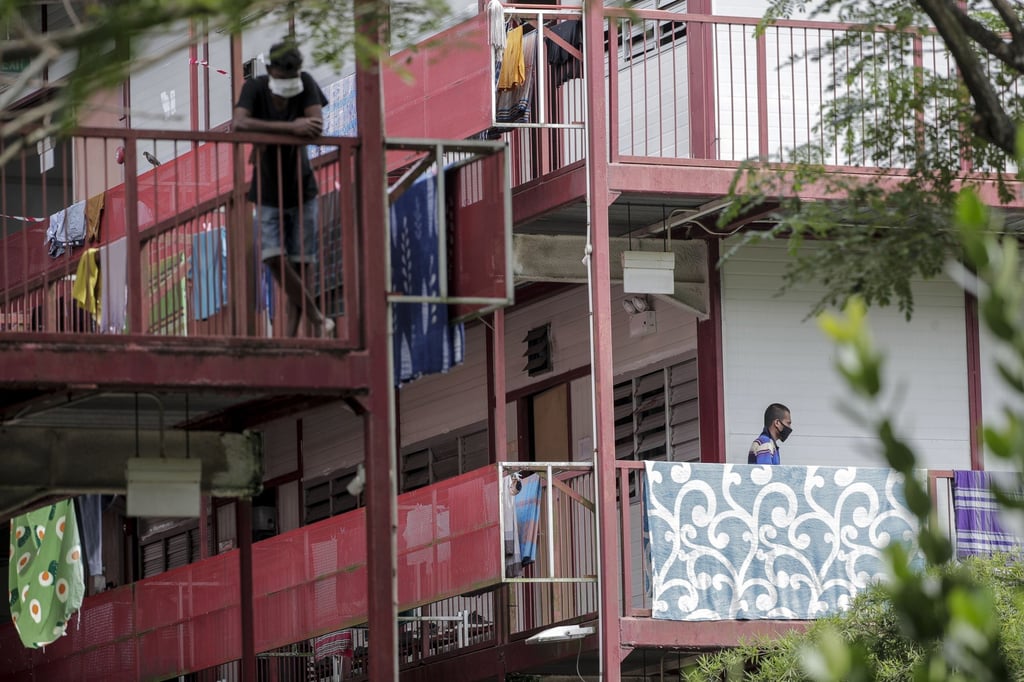
Like others who form the poorest and least advantaged parts of society around the world, the migrants in Singapore bore the brunt of the pandemic. Yet, once the government woke up to the mass infections sweeping the cramped dormitories, it moved rapidly to quell the spread of the disease and safeguard the health of the workers, giving them a better chance of surviving the virus, while trying to ensure they continued to get paid. Last year, it announced 11 new dorms would be built that would limit occupancy to 10 single beds per room.
Advertisement
While workers said they are glad of the medical support they get, their lives remain a far cry from that of most other residents in Singapore, who are able to shop, dine out, visit friends and even take cruises and attend concerts, with the virus all but eliminated locally. Human rights groups say the government should allow the workers similar freedom of movement and that long-term lessons should be learned from the pandemic about the need to provide better safeguards and conditions for migrant labour, especially in wealthy Singapore.
“The restriction is unfair: if the non-migrant worker community is almost back to normal life, why can’t the workers be treated the same?” said Luke Tan, operations manager at the Humanitarian Organization for Migration Economics, a local charity that works with the dorm residents. “Building and improving dorms is very superficial. It does not begin to scratch the surface of the structural vulnerabilities migrant workers face.”
Advertisement
Advertisement
Select Voice
Select Speed
1.00x