As coronavirus keeps tourists away from Bali, hungry monkeys raid homes searching for food
- The Sangeh Monkey Forest typically had about 6,000 visitors a month, but as the pandemic spread last year, that number dropped to about 500
- Villagers say the primates have been venturing out from the sanctuary to hang out on their roofs and await the right time to swoop down and snatch a snack

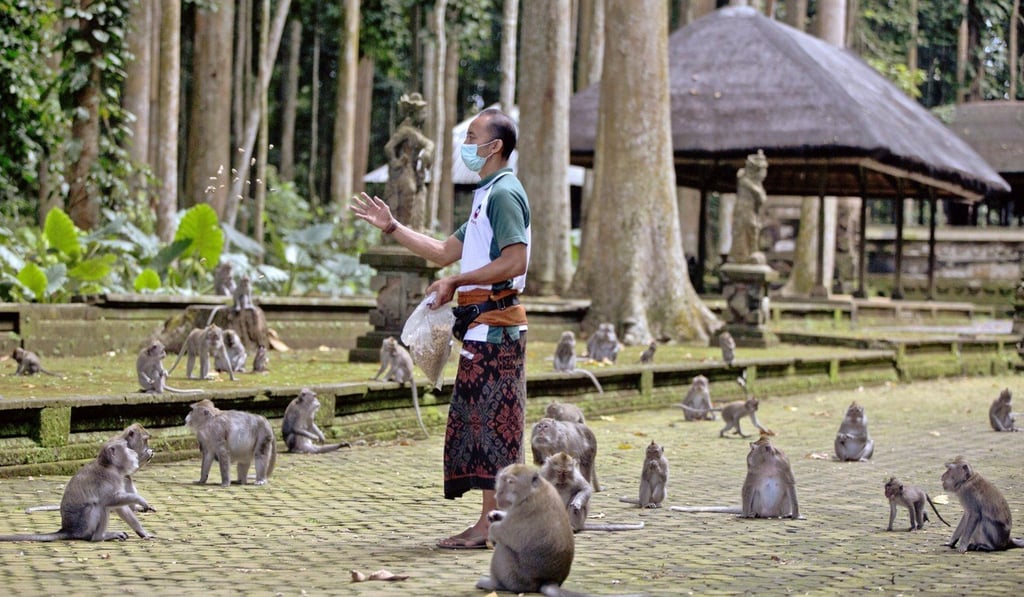
Villagers in Sangeh say the grey long-tailed macaques have been venturing out from a sanctuary about 500 metres away to hang out on their roofs and await the right time to swoop down and snatch a snack.
Worried that the sporadic sorties will escalate into an all-out monkey assault on the village, residents have been taking fruit, peanuts and other food to the Sangeh Monkey Forest to try to placate the primates.
“We are afraid that the hungry monkeys will turn wild and vicious,” villager Saskara Gustu Alit said.
About 600 of the macaques live in the forest sanctuary, swinging from the tall nutmeg trees and leaping about the famous Pura Bukit Sari temple, and are considered sacred.
In normal times the protected jungle area in the southeast of the Indonesian island is popular among local residents for wedding photos, as well as among international visitors. The relatively tame monkeys can be easily coaxed to sit on a shoulder or lap for a peanut or two.
Ordinarily, tourism is the main source of income for Bali’s 4 million residents, who welcomed more than 5 million foreign visitors annually before the pandemic.